Week 1 · 1st century: AD 1–100
Artwork
The first century left almost no Christian art. These three works were painted about 1,500 years later. Leonardo’s Last Supper appears in Unit 15, the century in which he painted it. Each shows a first-century event from the Gospels or Acts. They show how later artists imagined these events. They are not eyewitness records.
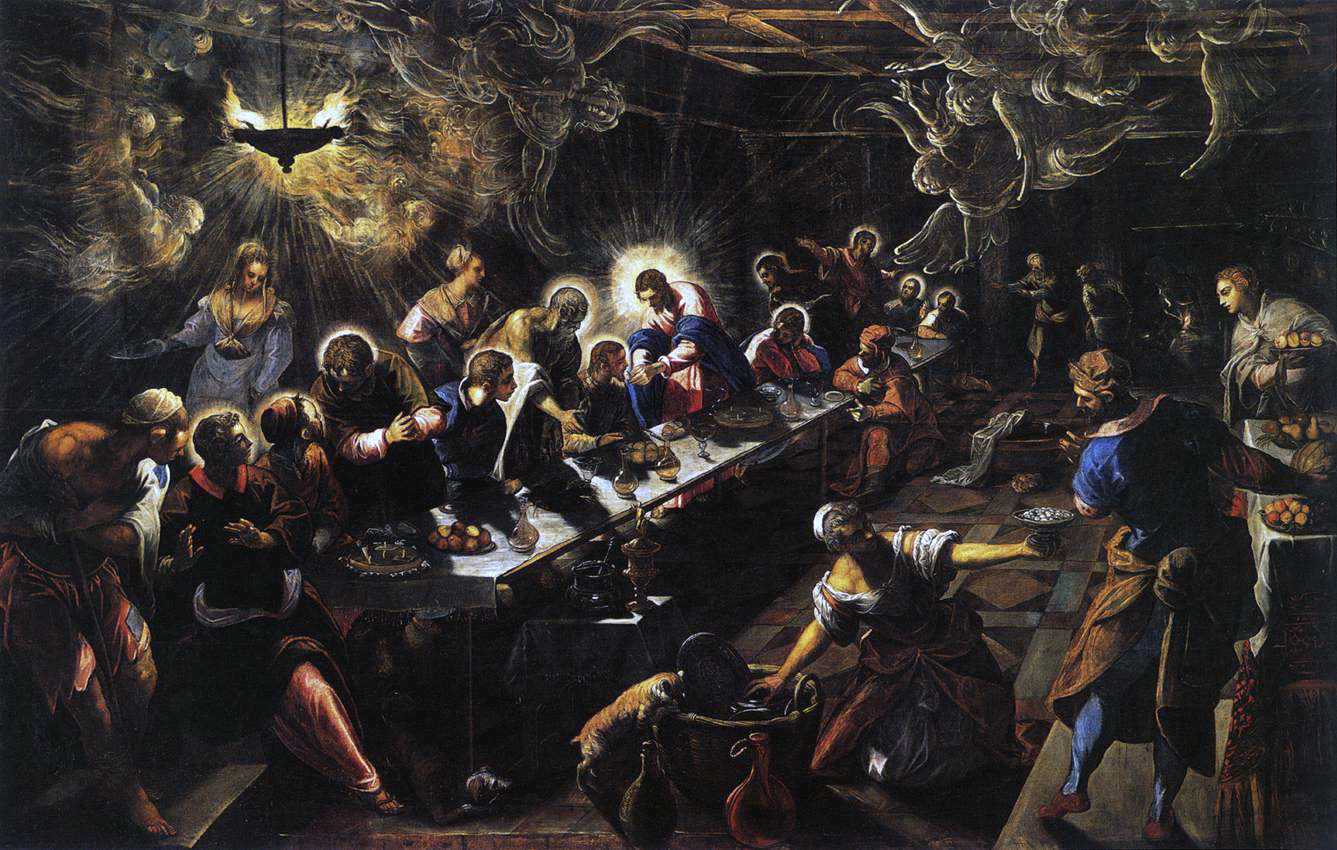
- Title: The Last Supper
- Artist: Jacopo Tintoretto
- Date made: 1592–1594 (a later painting of an event in the first century)
- Medium: oil on canvas, 365 by 568 cm
- Current location: Basilica of San Giorgio Maggiore, Venice
- Source page
- License: Public domain. Commons lists it as PD-Art and PD-old-100-expired.

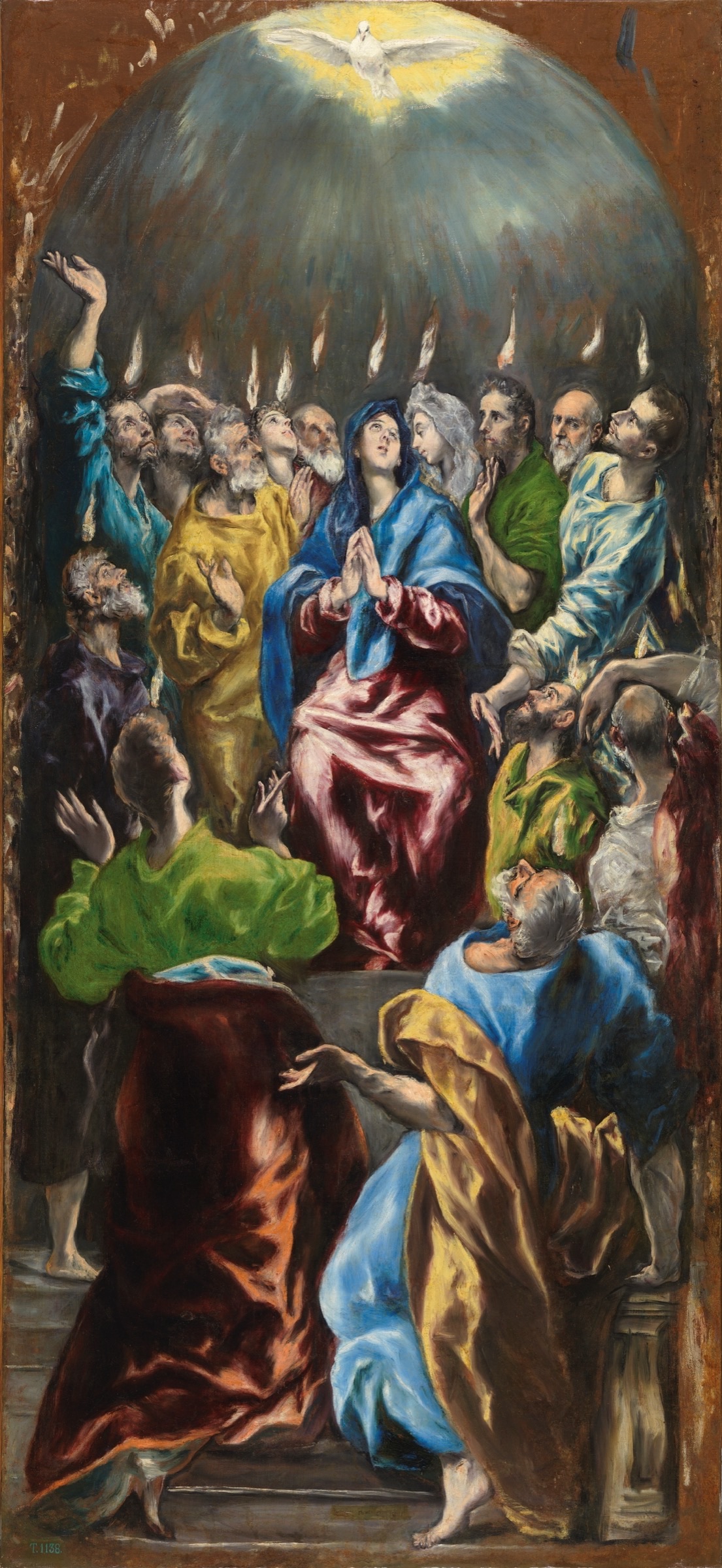
- Title: Pentecost
- Artist: El Greco (Domenikos Theotokopoulos)
- Date made: about 1596–1600 (a later painting of an event in the first century)
- Medium: oil on canvas
- Current location: Museo del Prado, Madrid
- Source page
- License: Public domain. Commons lists it as PD-old-100-expired and PD-Art.

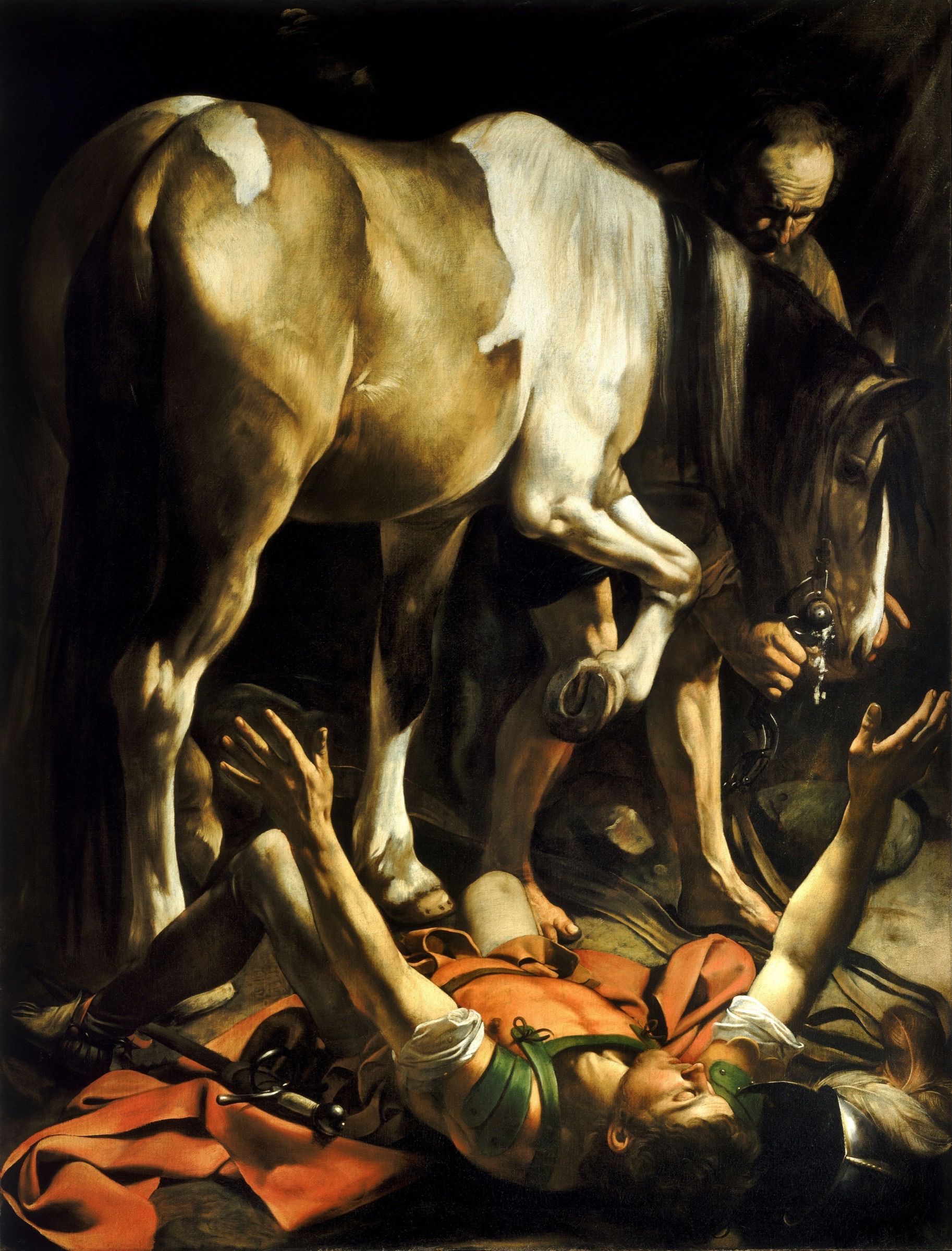
- Title: The Conversion on the Way to Damascus (Conversion of Saint Paul)
- Artist: Michelangelo Merisi da Caravaggio
- Date made: 1600–1601 (a later painting of an event in the first century)
- Medium: oil on canvas
- Current location: Cerasi Chapel, Santa Maria del Popolo, Rome
- Source page
- License: Public domain. Commons lists it as PD-old-100-expired and PD-Art.

What you see
In Tintoretto’s painting, a long table runs on a steep diagonal into a dark room. Christ stands near the middle of the table, with light shining from his head, and gives bread to an apostle. A hanging lamp blazes at the upper left, and angels drift through the smoke above. Servants carry dishes in the foreground. A woman kneels by a basket of food, and a cat looks into it.
In El Greco’s Pentecost, a white dove shines above the apostles. Small flames hang over their heads. Mary stands at the center with her hands pressed together. Caravaggio shows Saul on the ground, his arms raised, as a horse towers over him.
Why it matters
Tintoretto painted this Last Supper in the last years of his life, for the church of San Giorgio Maggiore in Venice. Most earlier painters, such as Leonardo, set the table straight across the picture. Tintoretto turned it on a sharp diagonal and filled the front with servants and daily work. The scene looks like a Venetian inn. Its strong light and motion point toward the Baroque style.
El Greco made his Pentecost for an altarpiece in Madrid. Caravaggio painted his work for a chapel in Rome. He uses strong contrast of light and dark.
All three works come from the late Renaissance or early Baroque. Artists of that age used scenes from the Gospels and Acts to teach the faith. The paintings add details that the text does not give. One example is the horse. Acts says only that Saul fell to the ground.
Christ and the sacraments
Tintoretto shows Christ giving the bread, the night he gave his body and blood in the bread and cup (Matthew 26:26–28). The Lord’s Supper began there. Pentecost led to Peter’s sermon and 3,000 Baptisms (Acts 2:41). In Caravaggio’s scene, the risen Christ speaks to Saul. Saul was baptized soon after (Acts 9:18). Each scene points to Christ and to the gifts he gives his church.
Teaching question
Tintoretto puts Christ’s giving of the bread at the center of a busy room. What do Christ’s words, “This is my body” and “This is my blood,” give to those who eat and drink? Read Augsburg Confession X, Solid Declaration VII, and Small Catechism: the Sacrament of the Altar.
An artistic picture does not set doctrine. Use the linked confessional texts to judge what the image teaches.
Sources
- Web Gallery of Art, Tintoretto, The Last Supper: date, medium, size, location, the diagonal table seen as an extension of the altar, the light about Christ’s head, and the angels.
- Museo Nacional Thyssen-Bornemisza, The Annunciation: the altarpiece for the Colegio de Doña María de Aragón was finished by July 1600, and the Pentecost stood in its upper level and is now in the Prado.
- SMU Meadows Museum, Prado loan announcement: dates the Pentecost 1596 to 1600 and places it in the Madrid altarpiece.
- Web Gallery of Art, Caravaggio, The Conversion on the Way to Damascus: date 1600–01, oil on canvas, 230 by 175 cm, Cerasi Chapel, and the horse and groom.
- Web Gallery of Art, Paintings in the Cerasi Chapel: the 1600 contract and the chapel in Santa Maria del Popolo.
- Acts 9:1–19 and Acts 2: the biblical accounts.