Week 2 · 2nd century: AD 101–200
Artwork
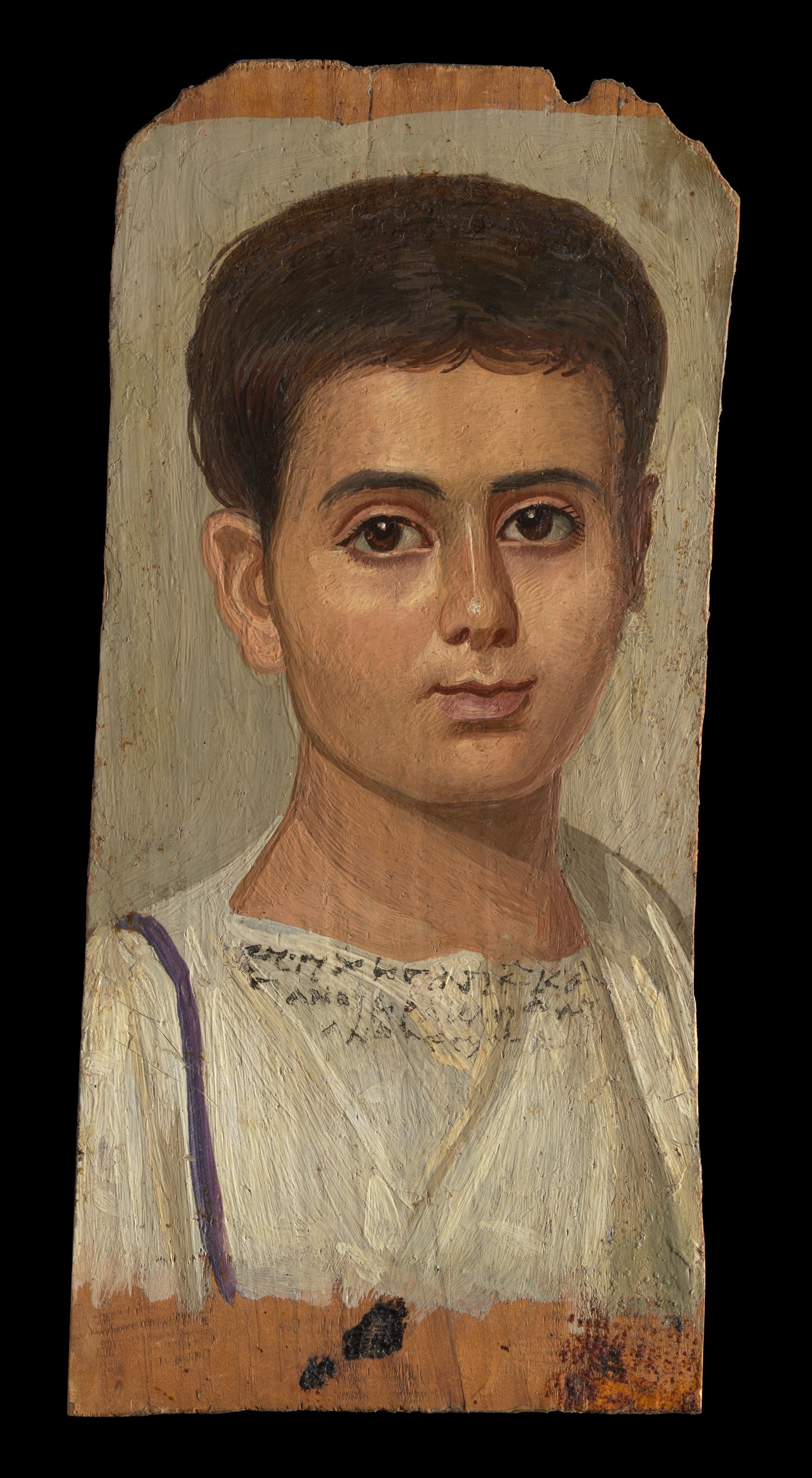
- Title: Portrait of the Boy Eutyches
- Artist: Unknown
- Date made: about AD 100 to 150 (the museum’s dating, which falls in this century)
- Medium: Encaustic (pigment mixed with hot wax) on wood, 38 cm tall
- Current location: The Metropolitan Museum of Art, New York, accession 18.9.2
- Source page
- License: CC0 1.0, the Met’s Open Access program
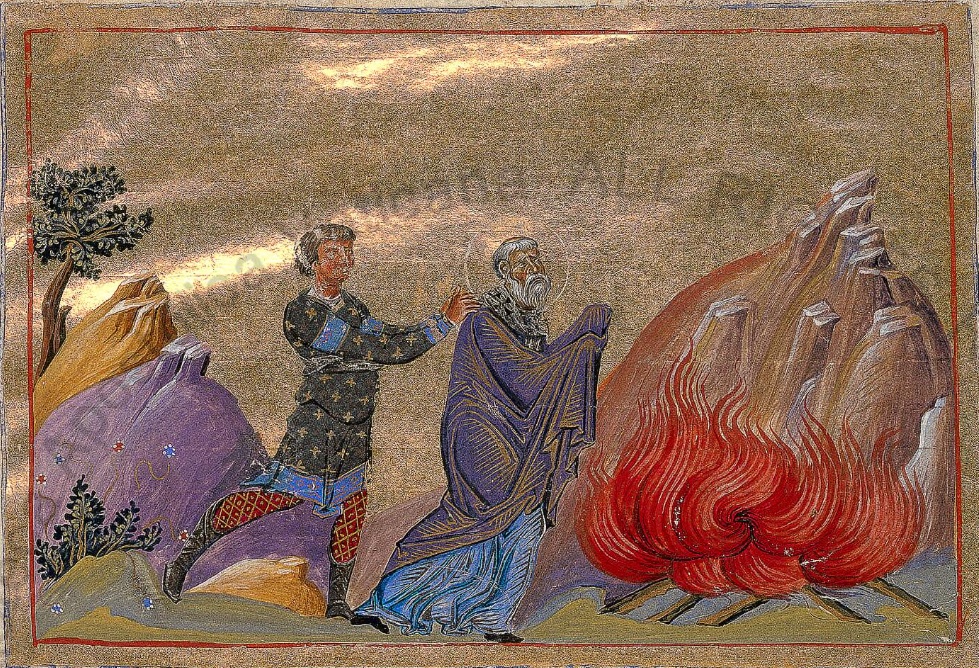
- Title: Polycarp of Smyrna, from the Menologion of Basil II
- Artist: Painters of the imperial workshop in Constantinople (Pantoleon led a team of eight named artists)
- Date made: about AD 1000, nearly 850 years after Polycarp died (Wikimedia Commons gives 985)
- Medium: Paint and gold on parchment, an illuminated manuscript page
- Current location: Vatican Library, Vat. gr. 1613, page 419
- Source page
- License: public domain, from the file page’s license section


What you see
The first picture is a painted portrait of a boy on a thin wooden panel. He looks straight at the viewer with large dark eyes and a faint smile. His short brown hair is neat. He wears a white tunic with a purple stripe on one shoulder. Greek letters are written across the tunic, and the Met titles the portrait with the name Eutyches. The second picture shows an old, white-bearded man in a blue and purple cloak. A younger man in a patterned tunic holds his shoulder beside a large red fire. This is Polycarp at his death.
Why it matters
Portraits like Eutyches were made in Roman Egypt, mostly in the Faiyum region. They were set over the faces of mummies. They mix Greek and Roman painting with Egyptian burial custom. They show how people in the Roman world looked in the century of Ignatius and Polycarp. They are not Christian art. The Polycarp page comes from a Byzantine book of saints’ lives made about AD 1000. It shows how later Christians remembered a martyr of this century. Together the two pictures show the world the church lived in and the faith that it kept under pressure.
Christ and the sacraments
A painted face tries to hold on to a dead person. The church answered death with Christ’s own bodily resurrection. Baptism joins believers to Christ’s death and life, and in the Lord’s Supper they receive his true body and blood. Polycarp told the governor that Christ was his King and Saviour. He faced the fire because he trusted that Christ had conquered death.
Teaching question
Eutyches was painted to keep a face after death. What hope does the Creed give for the body that is raised? Read the Apostles’ Creed and Small Catechism, Baptism.
Sources
- Getty Museum, Exploring Artistic Practice in Roman Egypt: A Study of Nine Portraits at the Met: dates from costume and hair, encaustic technique, Fayum and Hawara contexts, funerary purpose, and the painted inscription on the Eutyches tunic (18.9.2).
- Metropolitan Museum of Art, collection record for object 547951: title, date, medium, size, credit line, and public-domain status.
- Foundation of the Hellenic World, Menologion of Basil II: date of about 985, eight named artists, painted miniatures, and the shelfmark gr. 1613.
- Facsimiles.com, Menologion of Basil II: date around 1000, Pantoleon as probable master of the group, parchment with burnished gold, and Vat. gr. 1613.
- Martyrdom of Polycarp, §§9 and 16: the confession of Christ and the death at the fire.