Week 15 · 15th century: AD 1401–1500
Artwork
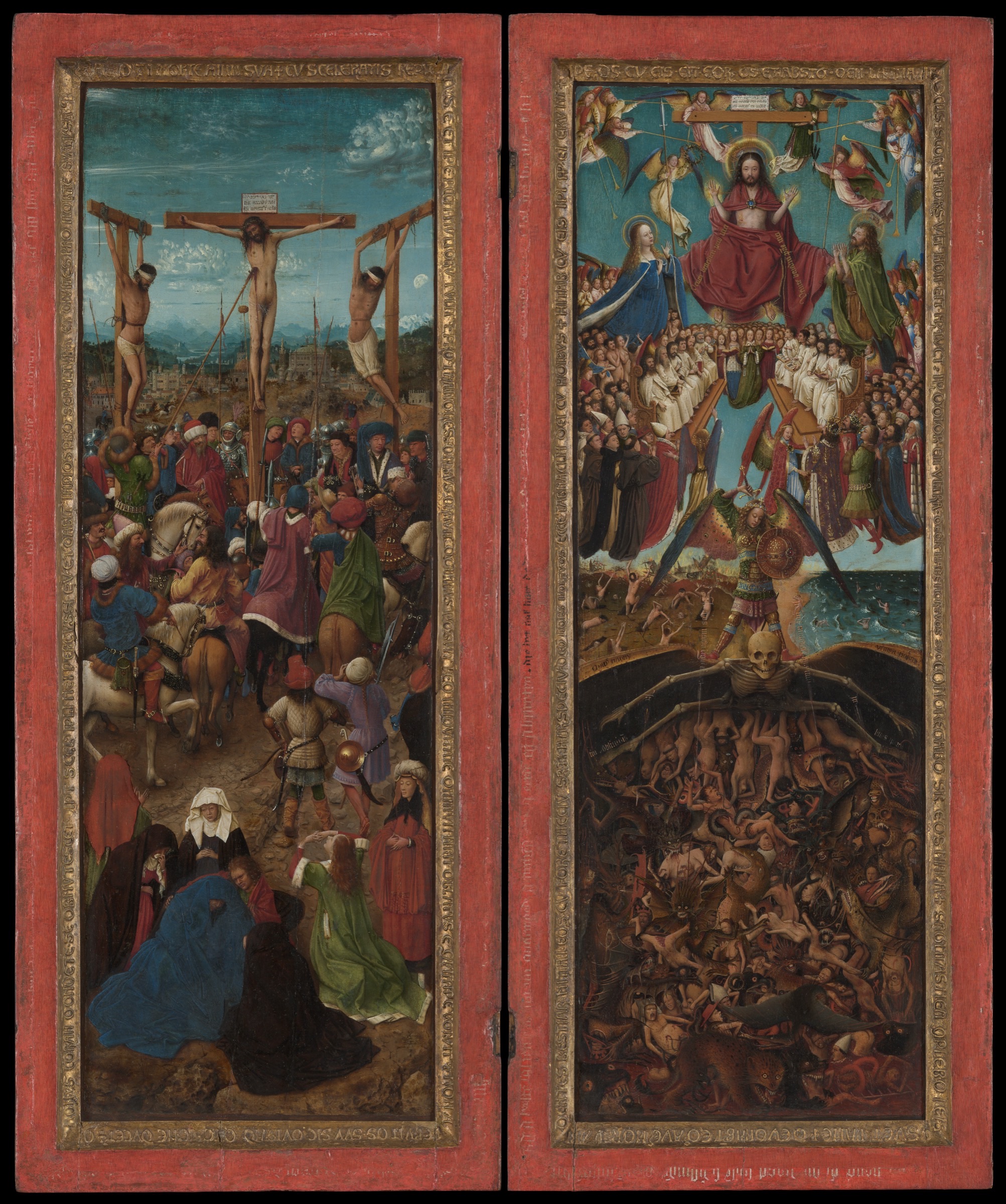
- Title: The Crucifixion and The Last Judgment (two panels)
- Artist: Jan van Eyck (the Getty record adds a workshop assistant)
- Date made: about 1436–1438 by the Metropolitan Museum of Art. The Getty record gives 1440–1441.
- Medium: oil on canvas, transferred from wood
- Current location: The Metropolitan Museum of Art, New York (accession 33.92ab)
- Source page: Met Museum collection record
- License: CC0 1.0 (Met Open Access)
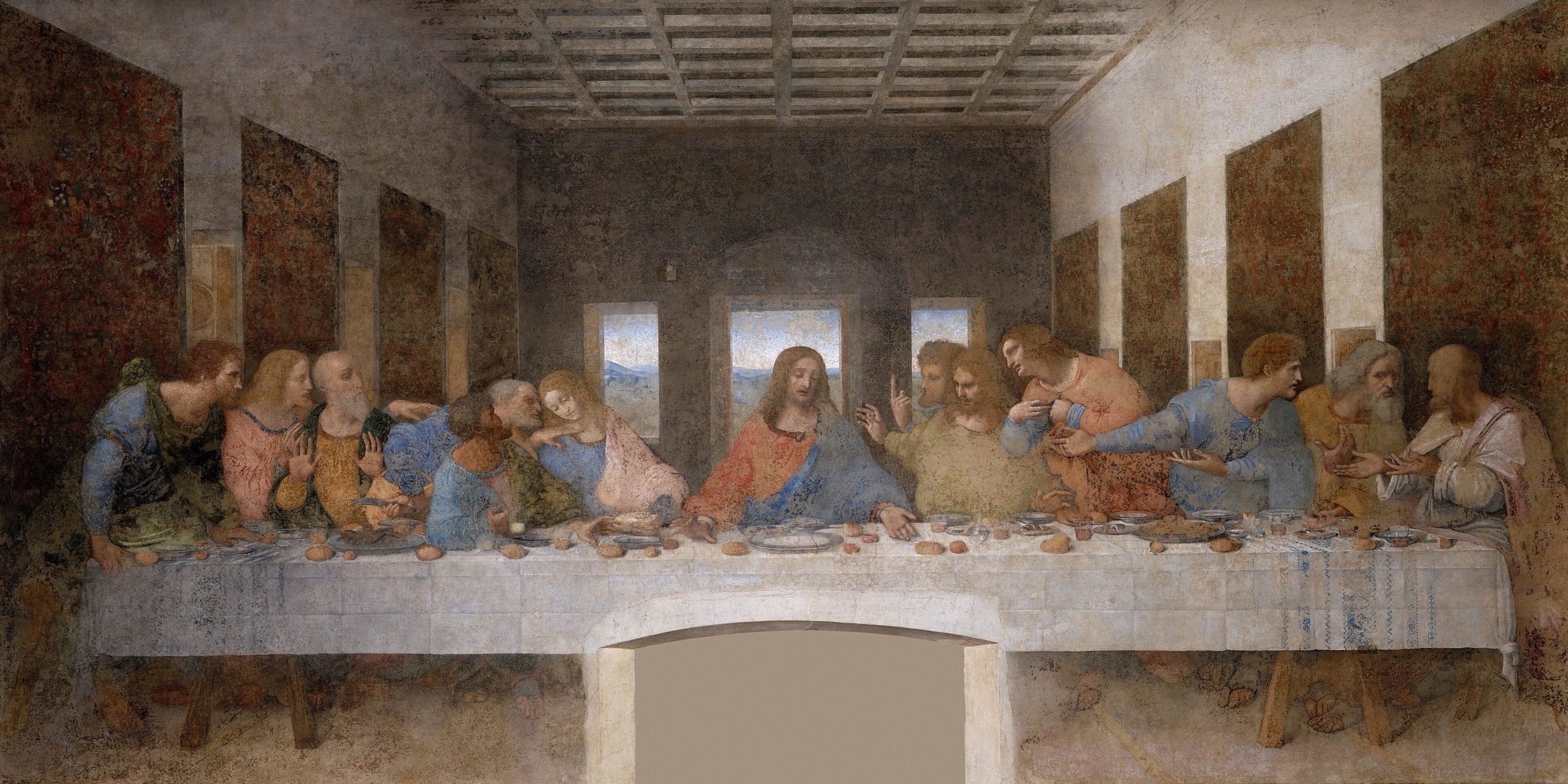
- Title: The Last Supper (Il Cenacolo)
- Artist: Leonardo da Vinci
- Date made: about 1495–1498
- Medium: oil and tempera on dry wall plaster (a mural, not true fresco). Some catalogues list it as tempera on gesso, pitch, and mastic.
- Current location: Santa Maria delle Grazie, Milan
- Source page: Wikimedia Commons file page
- License: Public domain (Commons file page, license section). The image was resized for this course.

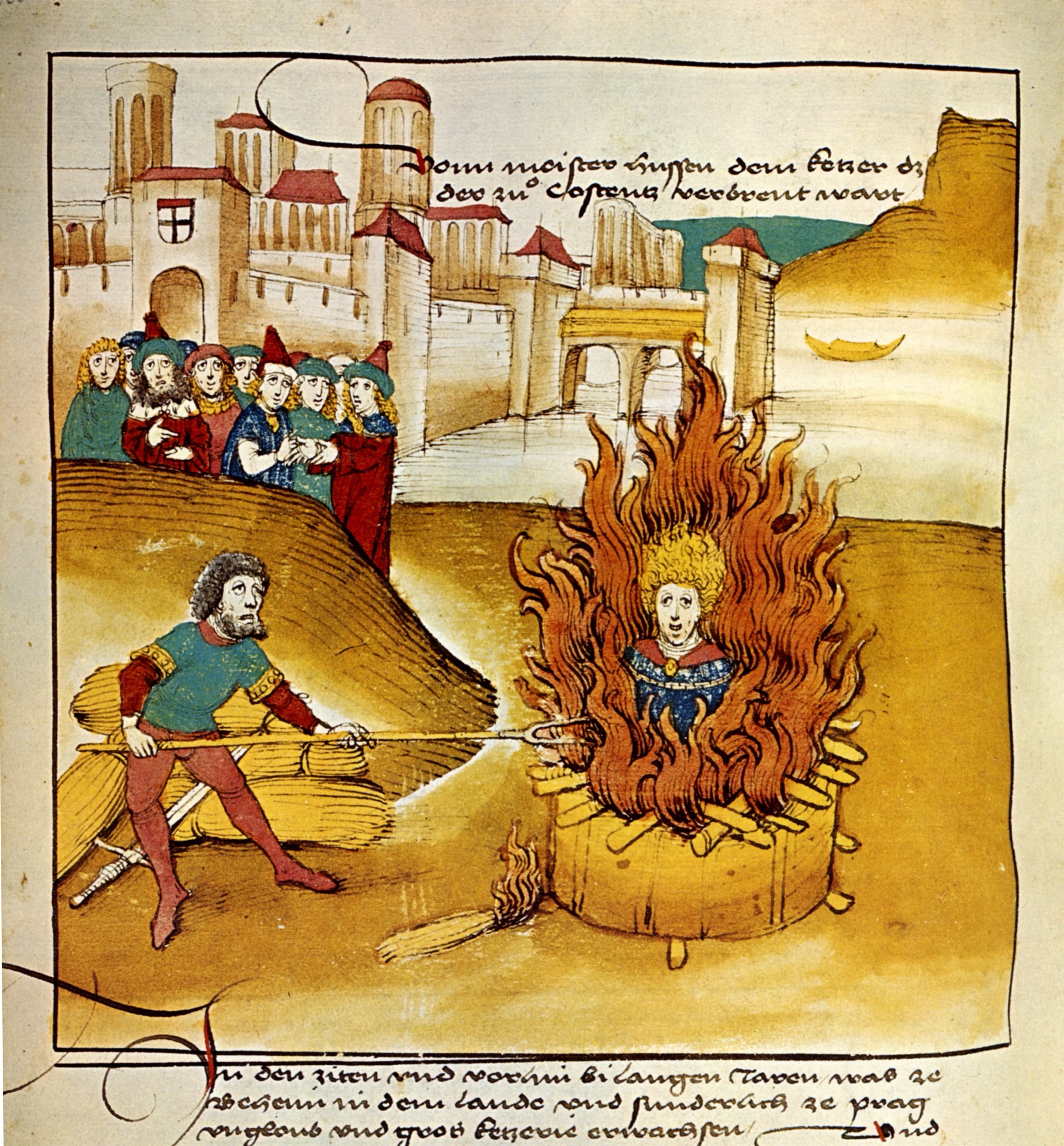
- Title: Burning of Jan Hus at the stake (Spiezer Chronik)
- Artist: Diebold Schilling the Elder
- Date made: 1485 (the chronicle was written in 1484 and 1485)
- Medium: illuminated manuscript page (ink and colors on paper)
- Current location: Burgerbibliothek Bern, Switzerland
- Source page: Wikimedia Commons file page
- License: Public domain (Commons file page, license section)

What you see
The first work is a pair of small panels. On the left, Christ hangs on the cross between two thieves while mourners kneel below. On the right, Christ sits in judgment above rising dead, with a skeleton and a crowd of the damned beneath. The second work shows Christ at a long table with twelve apostles, who react to his words. The third shows Hus in a barrel of flames, a man with a pitchfork, and watching townspeople.
Why it matters
Van Eyck belongs to the Flemish painters who made oil painting a fine, detailed art. The Met dates the panels to the 1430s. Leonardo painted The Last Supper for a monastery dining hall at the end of the century. It became the best-known picture of that meal. Schilling’s chronicle page shows how Swiss readers saw the death of Hus in 1485, seventy years after it happened. Its caption calls Hus a heretic. Together the three works show how the century pictured Christ’s cross, Christ’s Supper, and the church’s fight over reform. The Met notes that the Crucifixion panel contains antisemitic stereotypes. Discuss that carefully and do not copy it.
Christ and the sacraments
The first panel shows Christ’s death for sinners, which is the ground of Baptism and the Supper. Leonardo’s mural shows the Supper where Christ gave his body and blood. The Hus page recalls the fight over the cup, which Constance denied to the laity in 1415. All three works point to Christ’s saving work and to the sacraments he gave.
Teaching question
Constance banned the cup for lay people. Christ said, “Drink of it, all of you.” How does the Lutheran reading of the Lord’s Supper answer the council? Read Augsburg Confession XXII.
Sources
- Met Museum Open Access record for 33.92ab: title, artist, date, medium, accession, and public-domain status.
- Getty CONA record: the older date of 1440–1441, the workshop assistant, and the note that the panels were once parts of a larger object.
- Italian Renaissance Resources, A Closer Look: Leonardo da Vinci’s Last Supper: date of 1495 to 1498, oil and tempera on dry plaster, the Santa Maria delle Grazie refectory, Ludovico Sforza as patron, and the apostles’ reactions.
- Britannica 1911, Leonardo da Vinci: the commission for the Milan dining hall.
- e-codices, Burgerbibliothek Bern, Mss.h.h.I.16 (Spiezer Chronik): author Diebold Schilling, date 1484/85, paper, the Burgerbibliothek Bern holding, and the page on the burning of Jan Hus at Constance in 1415.