Week 16 · 16th century: AD 1501–1600
Artwork
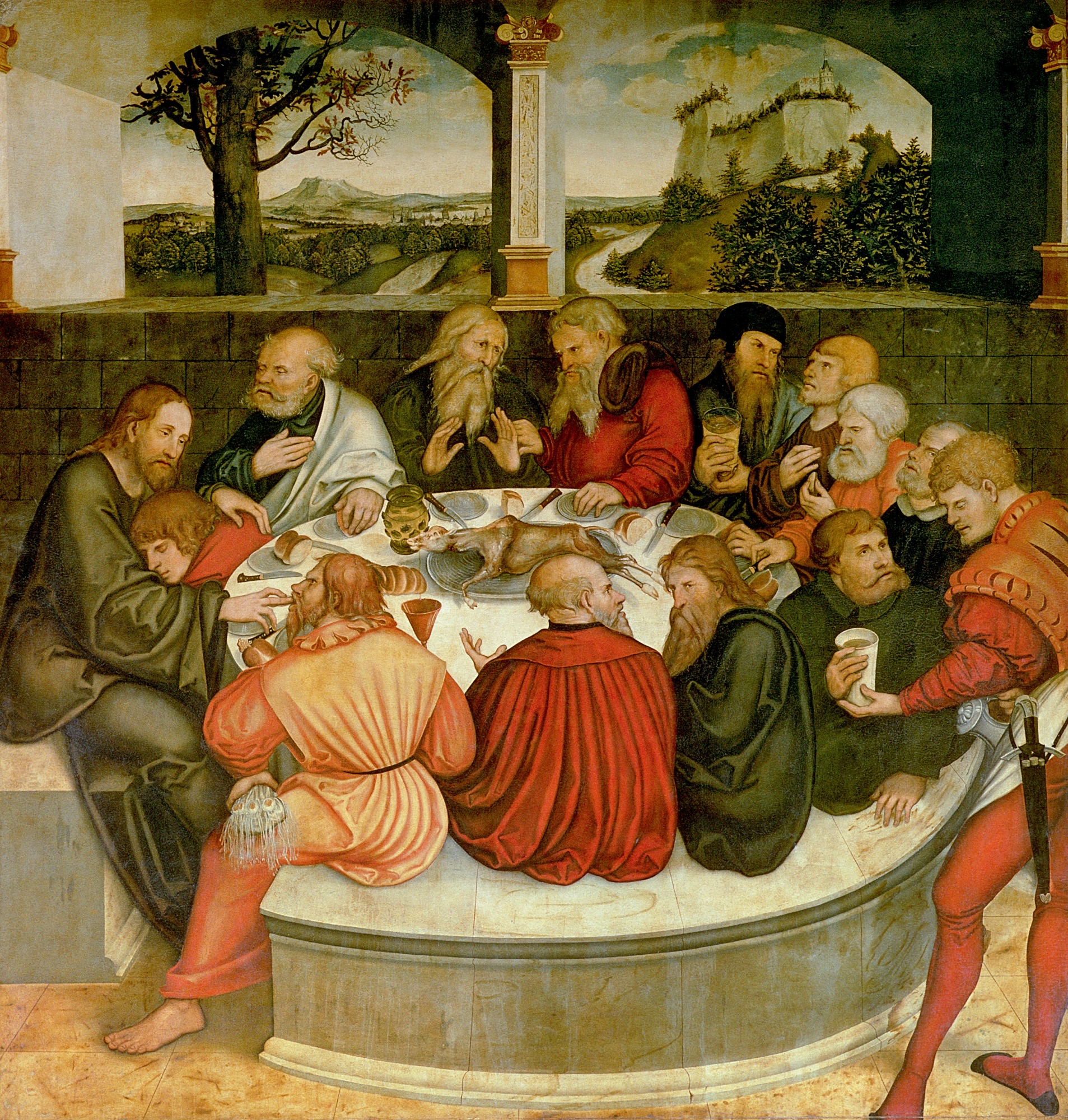
- Title: The Last Supper, central panel of the Wittenberg Altarpiece (also called the Reformation Altarpiece)
- Artist: Lucas Cranach the Elder and Lucas Cranach the Younger, with their workshop
- Date made: 1547 to 1548 per the Cranach Digital Archive; the altarpiece is usually said to have been installed in Wittenberg in 1547, one year after Luther died
- Medium: oil on wood panel
- Current location: Town Church of St. Mary (Stadtkirche St. Marien), Wittenberg, Germany
- Source page
- License: public domain, as recorded on the Wikimedia Commons file page


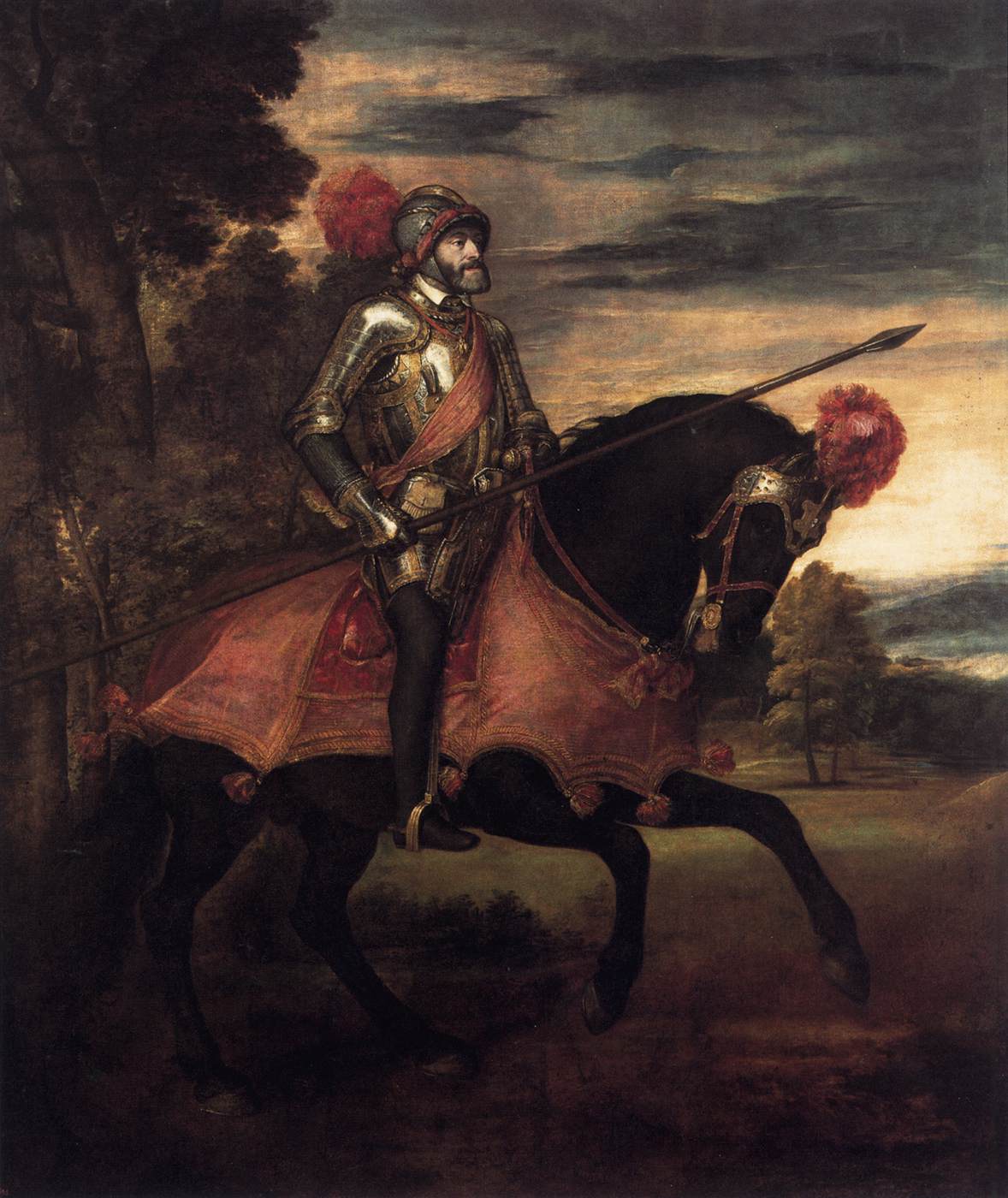
- Title: Emperor Charles V at Mühlberg (Equestrian Portrait of Charles V)
- Artist: Titian (Tiziano Vecellio)
- Date made: 1548
- Medium: oil on canvas
- Current location: Museo del Prado, Madrid, Spain
- Source page
- License: public domain, as recorded on the Wikimedia Commons file page


What you see
The first picture shows Christ at table with His twelve disciples, seated around a round stone table. The meal is the Last Supper. Bread, a roast and cups stand on the white cloth. One disciple leans against Christ’s chest. A servant in a red knight’s suit stands at the right edge with a cup. Beside him sits a bearded disciple who is Luther as “Junker Jörg” (Squire George), the name he used in hiding. The second picture shows Emperor Charles V on a dark horse. He wears armor with a red sash, carries a long lance, and rides through a dim wood under a stormy sky.
Why it matters
Cranach and his son made the Wittenberg Altarpiece for the town church where Luther’s friend Johannes Bugenhagen was pastor. It was installed in 1547, one year after Luther’s death. It shows the main teaching of the Lutheran church in paint. The side panels show Baptism and Absolution (the forgiveness of sins spoken by the pastor). The bottom panel shows Luther preaching Christ crucified. Luther and a Wittenberg printer sit among the apostles. Titian painted the second work in 1548. It celebrates Charles V’s victory over the Lutheran princes at Mühlberg on April 24, 1547. It shows the Catholic emperor’s side of the same years.
Christ and the sacraments
The altarpiece puts the Lord’s Supper in the middle and Baptism and Absolution beside it. Christ sits at the table with His disciples, and a servant brings the cup. The picture teaches that Christ gives His gifts through His Word and sacraments to His people. The Titian portrait shows the other side. Charles V won a war, but the picture says nothing about the Gospel that the Lutherans confessed.
Teaching question
How does Cranach’s Lord’s Supper match what the Lutheran Confessions say Christ gives in the Supper? Read Augsburg Confession X and Small Catechism: the Sacrament of the Altar.
Sources
- Cranach Digital Archive: Reformation altarpiece, central panel, The Last Supper: museum-style catalog entry for the date, the figures, and the panel’s subject.
- Gene Edward Veith, “Cranach Altarpiece,” Christian Culture (Fall 2021): installed in 1547, the year after Luther died; Last Supper in the middle, Melanchthon baptizing at left, Pastor Bugenhagen using the Office of the Keys at right, and Luther preaching Christ crucified below.
- German History in Documents and Images, Martin Luther Preaching (1547): the predella of the Reformation altarpiece, with the Eucharist, Baptism, and Confession panels above it, dated 1547 to 1548.
- Web Gallery of Art, Titian, Emperor Charles V at Mühlberg: the date of 1548, oil on canvas, the Prado location, and the link to Charles V’s 1547 victory at Mühlberg.
- Sartle: Emperor Charles V at Mühlberg: a second description of the portrait and its Prado home.