Week 18 · Modern
18th centuryAD 1701–1800
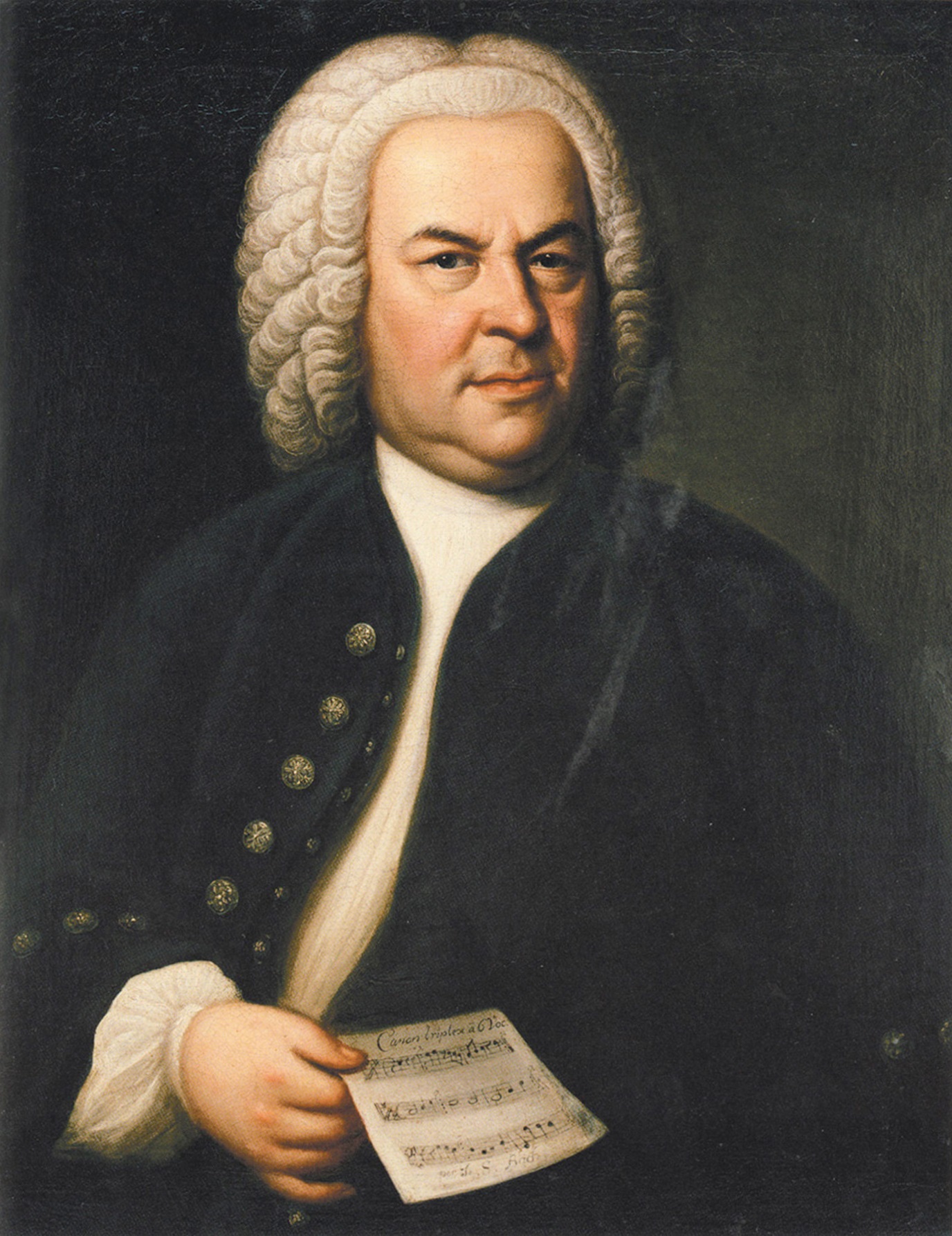 About this artwork →
Church life
- Henry Melchior Muhlenberg (1711–1787) gave colonial Lutherans one common worship service, written in 1748. The service centers on confession, absolution (the pastor’s announcement of forgiveness), preaching, and the Lord’s Supper, so Christ’s gifts shape every Sunday. P: Church Agenda of 1748, manuscript notice and translated primary text V1: Encyclopedia of Greater Philadelphia, Muhlenberg’s liturgy and church organization V2: Concordia University Chicago, Pennsylvania Ministerium, adoption of the liturgy. The sources show that the church adopted a common liturgy. They do not vouch for every instruction in it. The agenda was never printed in the 1700s. Pastors copied it by hand.
- Parish study: read P: Muhlenberg’s common agenda, chapters I and II with P: Small Catechism, Preface. Ask how shared worship can teach the faith across language lines.
- Pietism (a movement that stressed personal faith and holy living) shaped the Lutheran church in Halle, Germany. August Hermann Francke (1663–1727) began a school for poor children and an orphanage there in 1695, and by 1698 it housed 100 orphans. Pietism at its best called people back to Christ’s Word and Baptism. Pietism also led some people to doubt their baptism, because they felt no dramatic conversion. P: Francke, Pietas Hallensis (1705), account of the Halle orphan-house V1: Francke Foundations, history V2: Britannica 1911, Francke. Halle later trained and sent Muhlenberg and other pastors to America.
- Lutherans from Salzburg (in today’s Austria) came to Georgia. The Catholic archbishop Leopold von Firmian expelled the Protestants of Salzburg by an edict of October 31, 1731. About 300 of them accepted an invitation to Georgia. The first group arrived in 1734 under pastors Johann Martin Boltzius and Israel Gronau, whom Halle sent, and founded Ebenezer. P: Detailed Reports on the Salzburger Emigrants, vol. 2 (1734–1735), introduction V1: New Georgia Encyclopedia, Salzburgers V2: Pennsylvania College Lutheran Heritage Society, “Lutherans in Exile”. The sources give two landing dates: March 12 and March 17, 1734.
- Halle also sent missionaries abroad. Bartholomäus Ziegenbalg and Heinrich Plütschau landed at Tranquebar, India, on July 9, 1706, under the Danish king. Their aim was to teach the Gospel and baptize believers. P: Ziegenbalg, Propagation of the Gospel in the East (1709) V1: Boston University, Ziegenbalg biography V2: Allgemeine Deutsche Biographie, Ziegenbalg.
- The American Revolution ended the privileged place of the Church of England in Virginia. The state’s Statute for Establishing Religious Freedom passed on January 16, 1786, and it helped shape the First Amendment. Lutherans had never held a state-church position, but they now served in a land where the government did not choose a church. P: Virginia Statute for Establishing Religious Freedom, transcription V1: Encyclopedia Virginia, the Statute V2: Teaching American History, Virginia Statute. Compare P: First Amendment, Bill of Rights transcript. Ask what the church owes the state and what the state must not do to the church.
Controversy and heresy
- The Enlightenment (an age that prized human reason) asked people to judge everything by their own reason. Immanuel Kant’s 1784 essay urges people to use their own understanding. P: Kant, “What Is Enlightenment?” V1: Cambridge, The Enlightenment, chapter excerpt on Kant’s essay V2: Stanford Encyclopedia of Philosophy, Enlightenment, Kant’s characterization. Reading: see how the essay treats public discussion of religion.
- Rationalism (making human reason the judge of what God revealed) challenged the Gospel. David Hume’s 1748 essay “Of Miracles” defines a miracle as “a violation of the laws of nature” and argues no testimony can prove one. This strikes at Christ’s resurrection. P: Hume, An Enquiry concerning Human Understanding, section X V1: Stanford Encyclopedia of Philosophy, Miracles V2: Britannica 1911, Hume, on the 1748 Philosophical Essays. Test particular claims about Christ’s divinity, resurrection, and the sacraments. Do not label all Enlightenment thought heresy. Read P: Kant’s essay beside P: Augsburg Confession III.
- Class discussion: Some revival preaching tied assurance of salvation to a remembered experience, as Wesley’s Aldersgate account does. Compare that with assurance resting on Christ’s promises in Baptism and the Supper. Do not treat every revival as one teaching. Use P: Wesley’s 1738 journal excerpt and P: Small Catechism, Baptism and Supper.
Councils and major events
- Rome and the Eastern churches number no ecumenical council in this century. Rome’s list goes from Trent (1545–1563) to Vatican I (1869–1870), and the Eastern churches count seven councils, ending in 787. The assemblies that matter for Lutherans were regional. P: Papal Encyclicals, list of the general councils V1: Catholic Encyclopedia, General Councils, Trent as the nineteenth and Vatican I as the twentieth V2: St Andrews Encyclopaedia of Theology, Conciliarity, §3.3, the councils received in East and West.
- The Pennsylvania Ministerium formed in Philadelphia in 1748. Six pastors and lay delegates of ten congregations organized it with Muhlenberg’s encouragement, and it adopted a common liturgy. P: Muhlenberg’s 1748 Church Agenda, historical manuscript notice and service text V1: Encyclopedia of Greater Philadelphia, Muhlenberg paragraph V2: Concordia University Chicago, Pennsylvania Ministerium. Its worship rests on Christ’s gifts in absolution and the Supper.
- Lutheran classification: Not classified. The Ministerium settled church order and worship forms, not doctrine. The Confessions allow such forms to differ where the Gospel and the sacraments stay pure. Augsburg Confession VII, Solid Declaration X
- Event study: treat a colonial Lutheran synod as a means of common confession, pastoral oversight, and shared worship. It does not have the standing of an ancient universal council. Read P: the Muhlenberg agenda and P: Augsburg Confession VII.
Major people
- John Wesley’s journal records an evening meeting in Aldersgate Street, London, on 24 May 1738. Someone read Luther’s preface to Romans. Wesley felt his heart “strangely warmed” and trusted Christ for his salvation. Luther’s preface describes the change God works through faith in Christ. P: Wesley journal entry reproduced by UMC V1: UMC Book of Discipline, “Roots,” Wesley’s 1738 experience V2: Wesleyan Theological Journal 24, 1989, scholarly discussion of the 1738 entry.
- Henry Melchior Muhlenberg arrived in Philadelphia on November 25, 1742, after study at Göttingen and Halle. In 1748 he helped found the Pennsylvania Ministerium and its common worship. P: Muhlenberg’s Church Agenda, manuscript notice and translated service V1: Encyclopedia of Greater Philadelphia, Muhlenberg V2: Concordia University Chicago, Pennsylvania Ministerium. Only V1 supports the 1742 arrival.
- Johann Sebastian Bach’s cantata BWV 7 sets Luther’s hymn “Christ unser Herr zum Jordan kam” (“Christ our Lord came to the Jordan”). Bach first performed it in Leipzig in 1724 for the feast of John the Baptist. Movements 1, 2, and 7 teach that Baptism is water joined to God’s Word and Christ’s blood. P: cantata text, translated by Francis Browne V1: J. S. Bach Foundation, “Zum Werk,” account of the chorale V2: Craig Smith, Emmanuel Music, discussion of the chorale and its setting.
- Person readings: use P: Muhlenberg’s agenda, confession, absolution, and Communion and P: Bach’s cantata text, movements 3–5. Compare their words with P: Small Catechism, Creed and Baptism. Ask how Christ’s incarnation, death, and resurrection shape worship and music.
- George Whitefield preached in the American colonies in 1739. He was an Anglican preacher who drew large crowds in the Great Awakening (a wave of revivals in the colonies). P: Franklin, Autobiography, section 44 V1: Library of Congress, Religion in Eighteenth-Century America V2: Britannica 1911, Whitefield.
- Jonathan Edwards preached “Sinners in the Hands of an Angry God” at Enfield on July 8, 1741. P: Edwards, Sinners in the Hands of an Angry God V1: Jonathan J. Edwards, textual authentication V2: Britannica 1911, Jonathan Edwards.
- William Carey published his missionary book, An Enquiry, in 1792. It argued that Christians must use means to take the Gospel to the nations. P: Carey, An Enquiry, section I V1: Boston University, Carey biography V2: William Carey University, Enquiry history.
Wider world
- Steam engines, 1769: James Watt patented a separate condenser (a part that cools used steam apart from the cylinder). P: Watt’s patent 913, dated title and second provision V1: Powerhouse Museum, specification and condenser explanation V2: Encyclopaedia Britannica, 1911, James Watt, first-patent paragraph. Use this as one anchor of the Industrial Revolution, not its single starting date.
- American independence, 1776: The Continental Congress adopted the Declaration of Independence on July 4. P: Declaration, dated heading and text V1: National Archives, creation timeline, July 4 entry V2: National Archives, Declaration history, revision and adoption account.
- French Revolution, 1789: France’s National Assembly adopted the Declaration of the Rights of Man and of the Citizen. P: Declaration, heading and preamble V1: Élysée, historical introduction V2: French National Archives, UNESCO nomination, historical background, pp. 3–4.
Confessional Lutheran connection
- The Lutheran confessions link the Gospel and the sacraments with God’s gift of forgiveness. P: Augsburg Confession V.1–4 V1: Apology XIII.1–5 V2: Large Catechism, Creed, Third Article, 47–55.
- Christology: the Son of God is one person with full divinity and full humanity. P: Augsburg Confession III.1–6 V1: Formula VIII.6–13 V2: Large Catechism, Creed, Second Article, 26–31. Application: judge any teaching that reduces Jesus to a moral teacher, as Enlightenment rationalism often did, by these passages. This is the curriculum’s confessional judgment.
- Sacraments: Baptism offers grace, including to children. Christ’s body and blood are truly present and given in the Supper. P: Augsburg Confession IX and X V1: Apology IX.51-53 and X.54-57 V2: Large Catechism, Baptism 47-63 and Sacrament 8-19. Comparison: read P: Muhlenberg’s Communion service beside P: Small Catechism, Baptism and Sacrament of the Altar. Ask who acts and what he gives. Bach’s BWV 7 teaches the same about Baptism.
- Pietism and revivals: this is the curriculum’s confessional judgment. The Confessions welcome earnest faith and holy living. They anchor assurance in Christ’s promise, given from outside us in the Word and sacraments, and not in feelings. See AC IV, V, and XII and the Small Catechism on Baptism.
- World-history comparison: compare P: the Declaration’s language about rights with P: Muhlenberg’s agenda. Ask how civic rights and membership in a church differ. See AC XVI, Civil Affairs.
- Awakening comparison: read Franklin’s account of Whitefield and Edwards’s sermon. Compare an observer’s description with a preacher’s words. Separate judgment, repentance, and the promise of Christ. Do not take one sermon as all of Edwards’s teaching or every awakening participant.
- Mission comparison: read Carey, Enquiry I and Matthew 28:18-20. Then read AC V and IX. Ask how the command to make disciples joins teaching, Christ’s authority, and Baptism. Judge the book’s argument apart from later missionary practice.
Lutheran developments
- The Pennsylvania Ministerium adopted a shared liturgy in 1748. P: Muhlenberg agenda, manuscript notice and church-service text V1: Encyclopedia of Greater Philadelphia, Muhlenberg paragraph V2: Concordia University Chicago, Pennsylvania Ministerium. Map activity: locate the Lutheran churches in these sources, from Ebenezer in Georgia to Philadelphia. Note that German, Swedish, and Salzburger Lutherans shared one confession across national lines.
- Confessional comparison: assess Christian education by P: Augsburg Confession IV, V, and XIII and P: Small Catechism, Preface. Keep Christ and the means of grace (Word and sacraments) central.