Week 3 · 3rd century: AD 201–300
Artwork
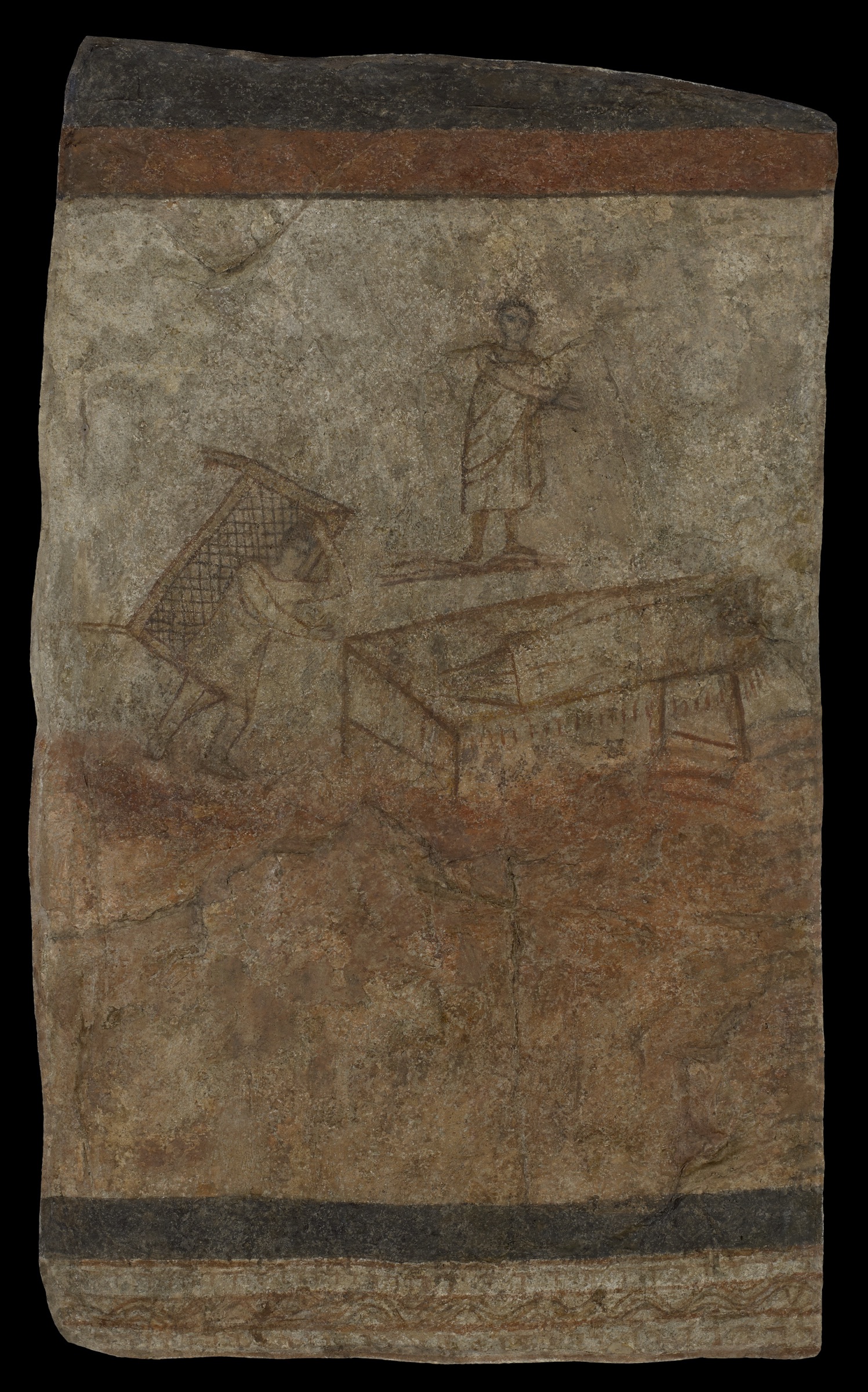
- Title: Baptistery wall painting: Christ Healing the Paralytic
- Artist: Unknown
- Date made: about AD 232 to 256. Yale gives “ca. A.D. 232”. Kraeling’s excavation report dates the house to 232, and a 2024 study argues for an earlier build. Yale News puts its conversion to a church about 234, while the Yale Art Gallery’s Dura-Europos site says about 240. So the painting most likely comes from the 230s to early 250s. The Persians took the city in 256.
- Medium: Paint on plaster
- Current location: Yale University Art Gallery, New Haven, Connecticut, accession 1932.1202
- Source page: Yale University Art Gallery and Wikimedia Commons file page
- License: CC0 1.0 public domain dedication, as stated by Yale. Commons marks the photo as public domain.
- File: artwork.jpg

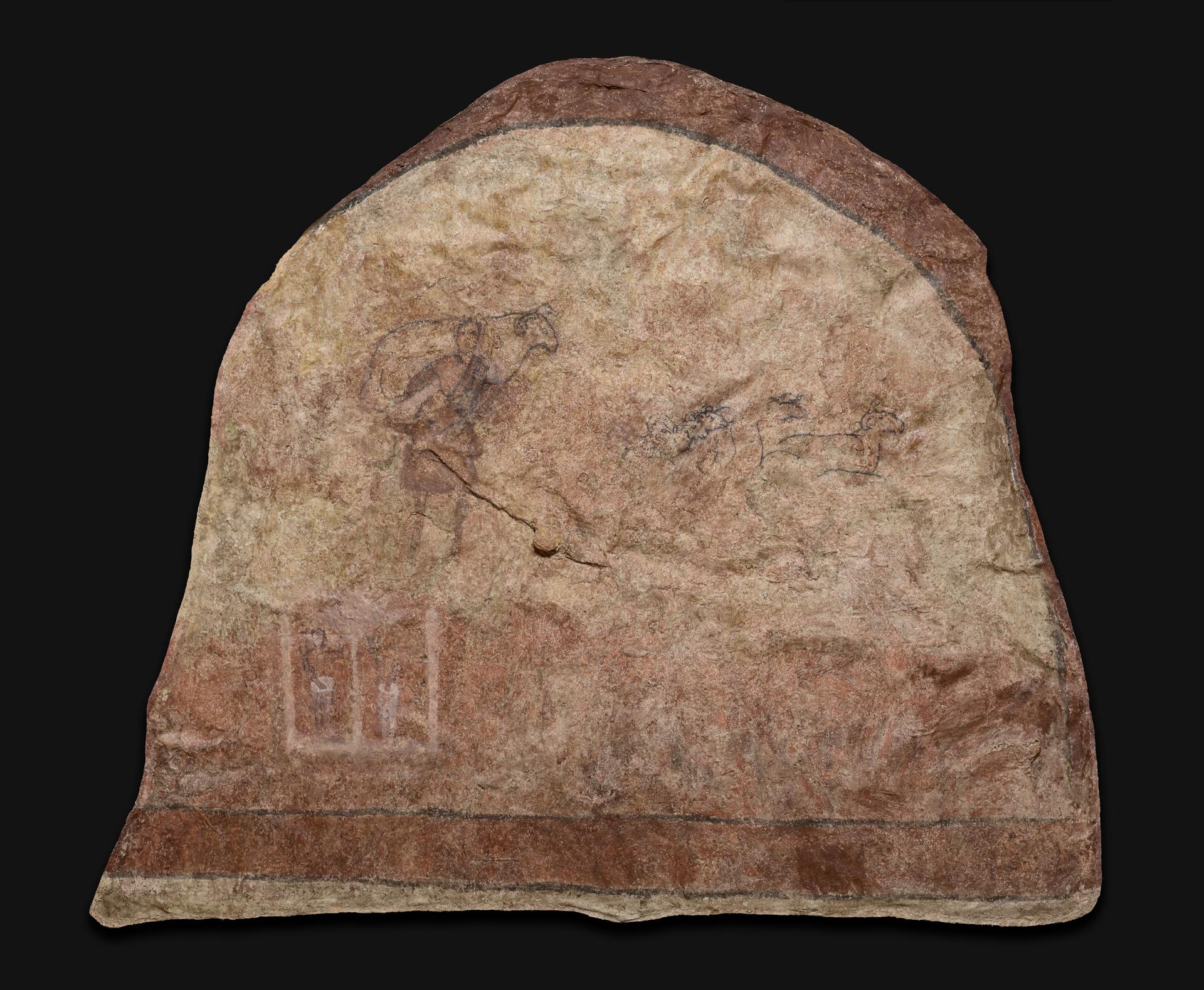
- Title: Baptistery wall painting: Good Shepherd and Adam and Eve
- Artist: Unknown
- Date made: about AD 232 to 256, with the same dating notes as above
- Medium: Paint on plaster
- Current location: Yale University Art Gallery, New Haven, Connecticut, accession 1932.1200
- Source page: Yale University Art Gallery and Wikimedia Commons file page
- License: CC0 1.0 public domain dedication, as stated by Yale. Commons marks the photo as public domain.
- File: artwork-2.jpg

What you see
The first painting shows a small figure in a long robe standing at the top, with one arm raised toward a sick man. This is Christ. Below him, a man bends under a bed on his back and walks away. The same man lies on his bed at the right. The figures are thin outlines in red, brown, and black on plaster. The second painting shows a young shepherd with a ram across his shoulders. Sheep gather at his right. At the lower left, two tiny figures in a white frame are probably Adam and Eve. Both works are faded and cracked. Their style is plain and quick, like a sketch.
Why it matters
These panels come from the oldest Christian house church that archaeologists have found. It stood in Dura-Europos, a Roman border town in Syria. The Persians attacked the town in 256. The Romans piled a ramp of earth against the wall, and it buried the house. That saved the paintings. They are among the oldest known paintings of Christ and the oldest known church wall paintings. They were found in 1932 and are now at Yale. The artists were not famous, and they worked in a local style. Still, the scenes show what the first congregations chose to paint in the room for Baptism. They chose healing, rescue, and the Good Shepherd, and not teaching about doctrine.
Christ and the sacraments
Both paintings decorate a baptistery, the room where new Christians were baptized. The healing scene shows Christ raising up a man who was unable to walk. Yale says it pointed to the healing power of Baptism and the forgiveness of sins. The Good Shepherd hung over the font. People baptized there saw themselves as his sheep. A painting does not set doctrine. Still, these images match what Scripture says about Baptism and Christ’s care.
Teaching question
Which words of Christ in Scripture make Baptism more than water, and how do these paintings help a new Christian trust that promise? Read Small Catechism, Baptism to answer.
Sources
- Yale University Art Gallery, Baptistery wall painting: Christ Healing the Paralytic, 1932.1202: museum record with date, medium, and the description of the healing scene.
- Yale University Art Gallery, Baptistery wall painting: Good Shepherd and Adam and Eve, 1932.1200: museum record and the description of the Good Shepherd above the font.
- Yale University Art Gallery, Dura-Europos: the Christian Building: conversion to a church about 240, the baptistery with its font, the Good Shepherd above the font, the Adam and Eve addition, the healing scene, and the embankment of 256.
- Yale News, “House call”: the house built about 232, renovated about 234 for worship, and buried by the embankment when Sasanian forces besieged the city.
- Pettegrew, “The Christian Building at Dura-Europos,” American Journal of Archaeology 128.3 (2024): abstract of Kraeling’s 232 date and the argument for an earlier build and a gradual conversion.