Week 5 · 5th century: AD 401–500
Artwork
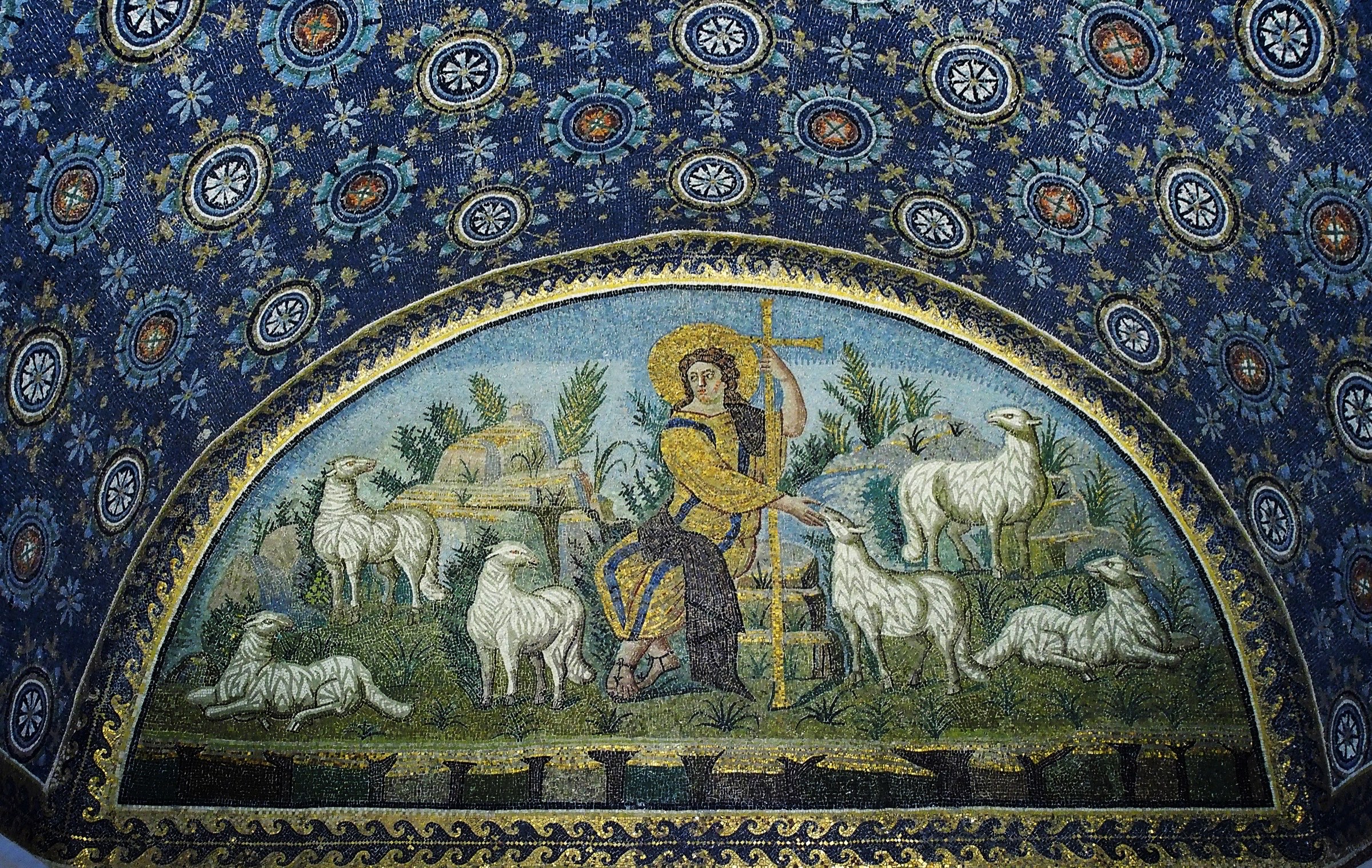
- Title: Christ as the Good Shepherd (lunette mosaic over the north entrance)
- Artist: Unknown
- Date made: about AD 425–450 (the building is dated between 425 and 450)
- Medium: Glass and stone mosaic
- Current location: Mausoleum of Galla Placidia, Ravenna, Italy
- Source page: Wikimedia Commons file page
- License: Public domain, as marked on the Commons file page (photograph by Petar Milošević, 2015)


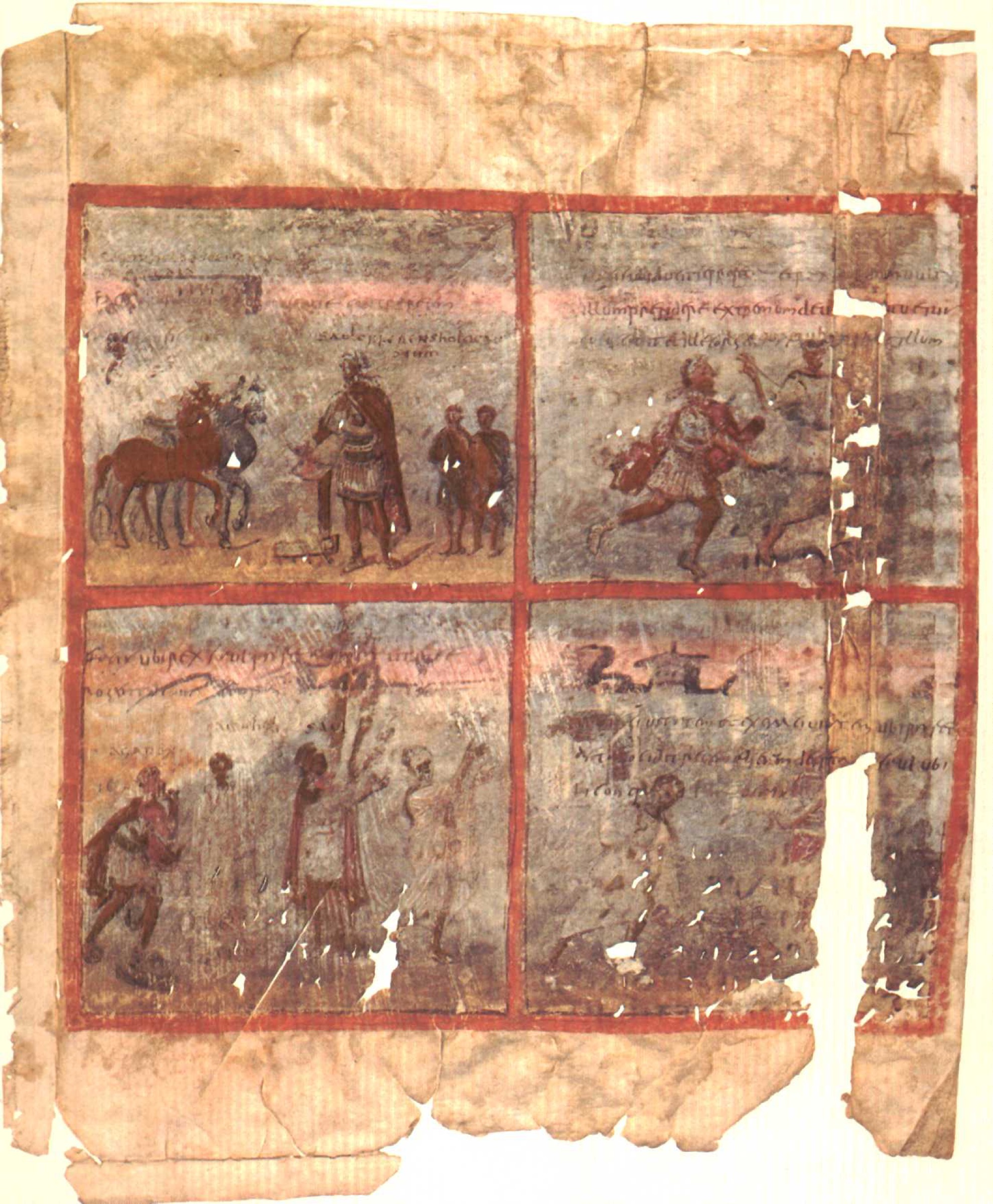
- Title: Quedlinburg Itala fragment, folio 2 recto (scenes from 1 Samuel 15)
- Artist: Unknown
- Date made: first half of the fifth century (the place of making is uncertain)
- Medium: Paint on parchment (illuminated manuscript page)
- Current location: Staatsbibliothek zu Berlin, Cod. theol. lat. fol. 485
- Source page: Wikimedia Commons file page
- License: Public domain, as marked on the Commons file page


What you see
The first image shows a half-circle mosaic. Christ sits in a green meadow among six white sheep. He has a gold halo and wears a gold robe with a purple cloak. He holds a tall gold cross like a staff. He reaches out to touch one sheep, and he looks back over his shoulder. A deep blue vault covered with gold-edged stars fills the space above him. The second image is a worn parchment page divided into four framed paintings. Each frame shows figures and horses in muted colors, with a few lines of Latin written inside it.
Why it matters
The Good Shepherd mosaic was made in Ravenna while Rome was losing power in the West. Christ appears as a calm young ruler, with imperial colors and a cross, among his sheep. Late antique artists were moving from lifelike scenes toward the flat, glowing style of later Byzantine art. The Quedlinburg fragment comes from what Inabelle Levin’s 1985 study calls the oldest illustrated Bible manuscript. It was copied in an Old Latin translation, the kind of text that Jerome’s work for the Vulgate was meant to replace. It shows how much care the church gave to the Scriptures in this century. Both works were produced in the same decades as Ephesus and Chalcedon.
Christ and the sacraments
The mosaic pictures Jesus’ words, “I am the good shepherd” (John 10:11). It shows one person who is both a gentle shepherd and a crowned ruler, which is the one Christ of Chalcedon’s definition. The shepherd feeds and guards his sheep, as Christ does through the Word, Baptism, and the Supper. The Bible page reminds us that Scripture points to Christ and gives the church its teaching.
Teaching question
If Christ is both God and man in one person, how does the Good Shepherd’s call in Baptism and the Supper reach sinners today?
Sources
- Medieval Mosaics, Ravenna, “Mausoleum” of Galla Placidia: building dated perhaps c. 430–50, and Christ holding a cross among his sheep.
- Art of the Middle Ages, Mausoleum of Galla Placidia: building dated c. 425–30, and the Good Shepherd lunette over the north entrance.
- Medieval Review, review of Lowden, Early Christian and Byzantine Art: early fifth-century pre-Vulgate Latin text of Samuel and Kings, flaked paint that shows the painter’s instructions, now in Berlin.
- Illuminated Manuscripts blog, Quedlinburg Itala: dates it to the first half of the fifth century.
- Open Library record of Inabelle Levin, The Quedlinburg Itala: The Oldest Illustrated Biblical Manuscript (Leiden: Brill, 1985): the standard study of the surviving leaves from Samuel and Kings.