Week 13 · 13th century: AD 1201–1300
Artwork
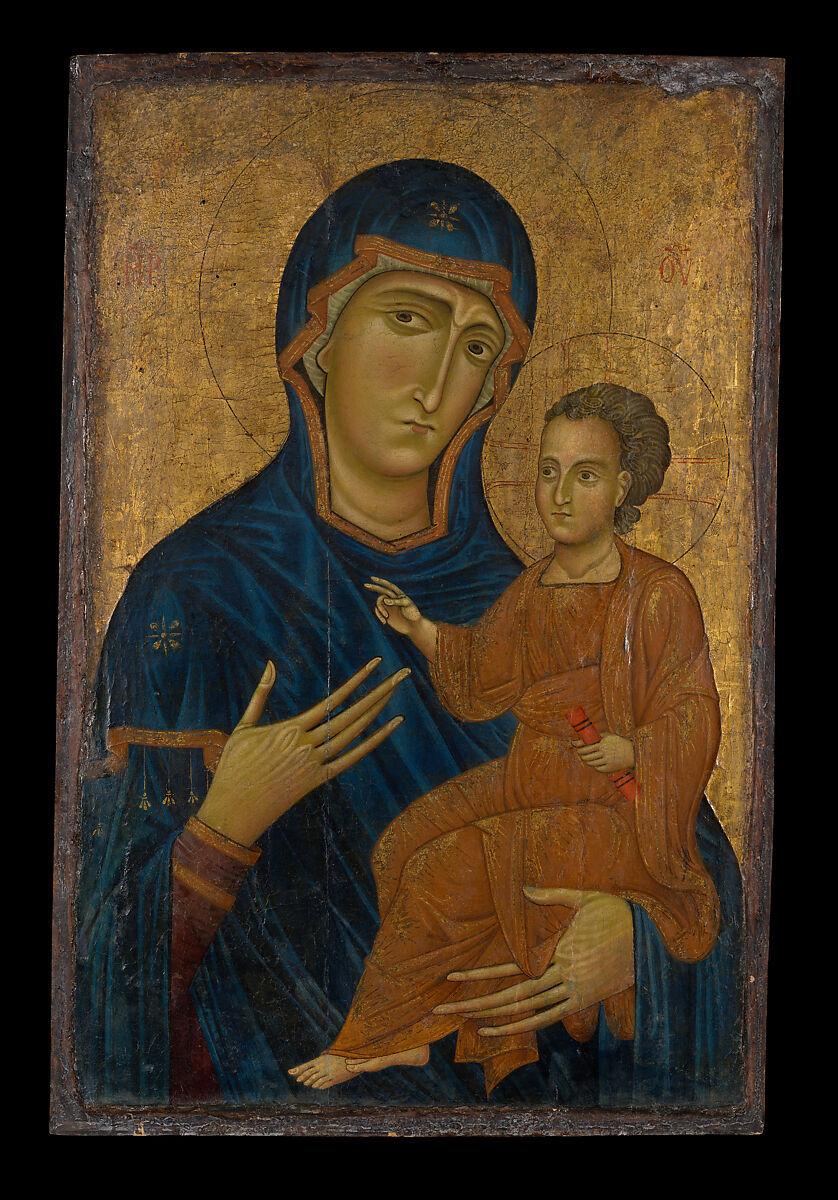
- Title: Madonna and Child
- Artist: Berlinghiero (Berlinghiero Berlinghieri of Lucca)
- Date made: possibly the 1230s (the museum gives no exact year)
- Medium: tempera on wood, gold ground
- Current location: The Metropolitan Museum of Art, New York (accession 60.173)
- Source page · Image file
- License: CC0 1.0 (Met Open Access)
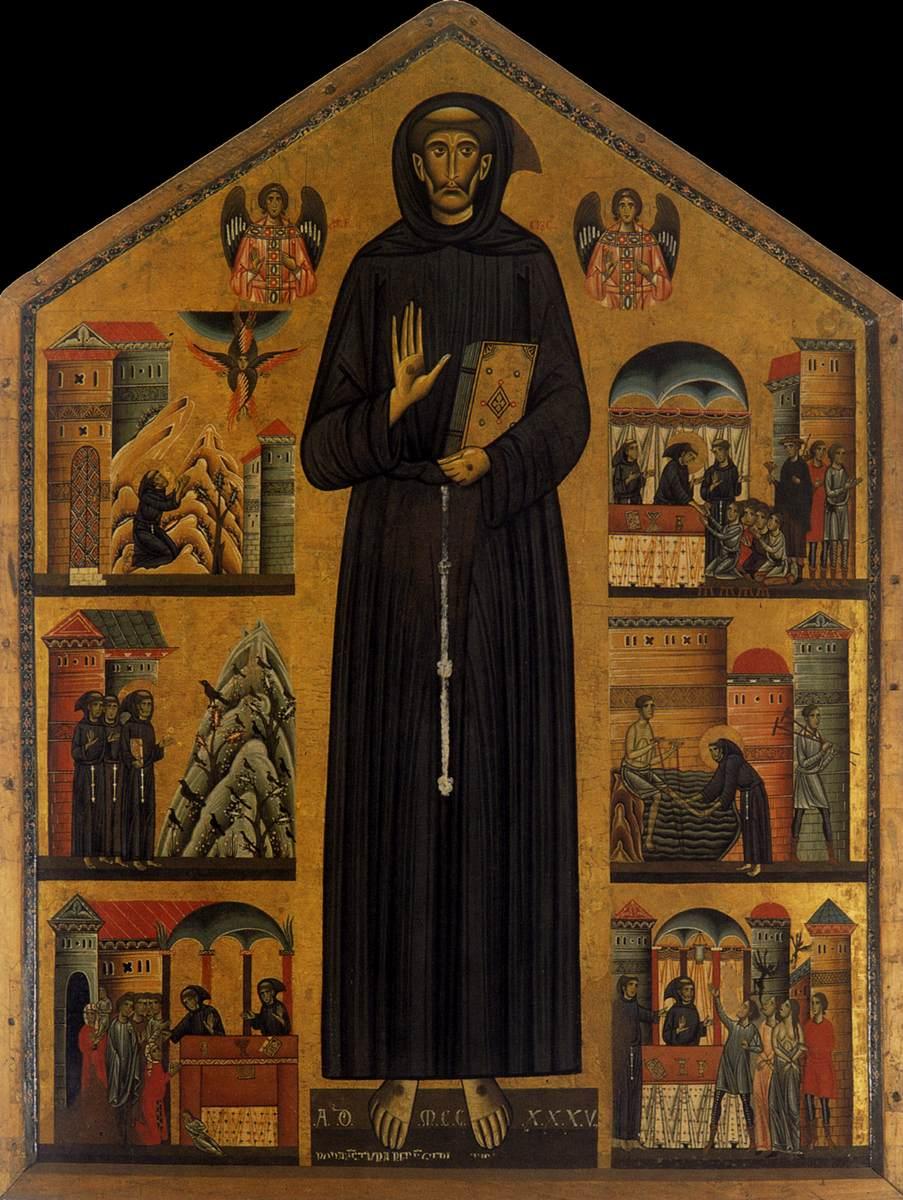
- Title: Saint Francis of Assisi and Scenes of His Life (the Pescia altarpiece)
- Artist: Bonaventura Berlinghieri
- Date made: 1235 (the painted date on the panel)
- Medium: tempera on wood
- Current location: Church of San Francesco, Pescia, Italy
- Source page · Web Gallery of Art record
- License: Public domain (a faithful photo of a work by an artist who died long ago), per the Commons file page

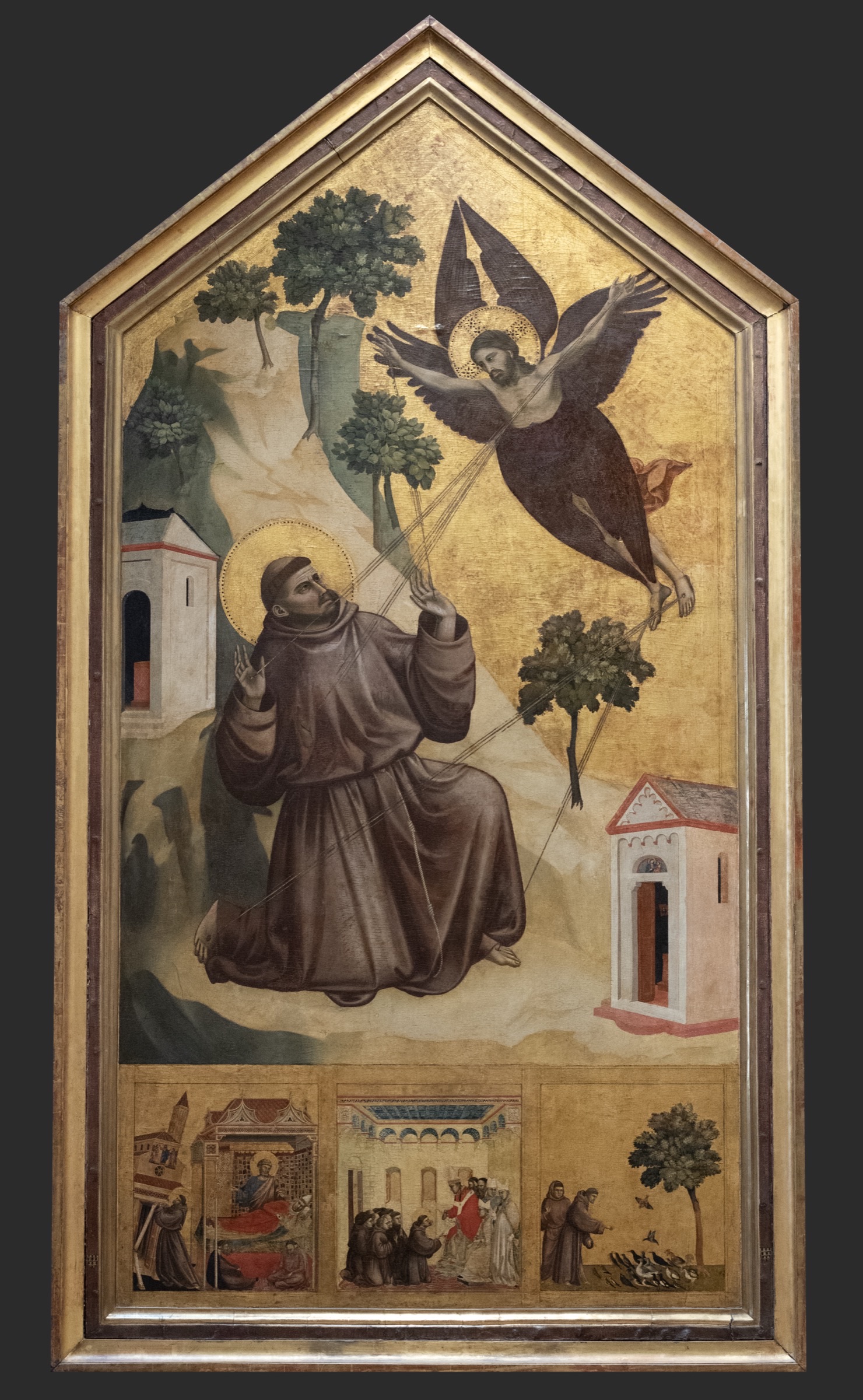
- Title: Saint Francis Receiving the Stigmata
- Artist: Giotto di Bondone
- Date made: about 1295 to 1300 by many scholars; the Louvre catalogue gives 1300 to 1325
- Medium: tempera and gold on panel
- Current location: Musée du Louvre, Paris (inv. 309)
- Source page
- License: Public domain, per the same Commons file page

What you see
The first panel shows Mary holding the child Jesus against a gold background. Her blue robe is dark, and her large hand points to him. He raises one hand in blessing. The second panel shows Francis standing in his plain brown habit. Six small scenes from his life surround him. The third panel shows Francis kneeling on a hillside. A winged figure of the crucified Christ sends rays to his hands, feet, and side. Below, three small scenes show a pope’s dream, the approval of the Rule, and Francis preaching to birds.
Why it matters
These three panels show how thirteenth-century Italian painting moved from the stiff Byzantine style toward lifelike figures. Berlinghieri’s altarpiece still uses the Byzantine style, called the “Greek manner.” It is one of the earliest images of Francis after his canonization, made only nine years after his death. Giotto, about sixty years later, gives Francis weight, space, and feeling. His small predella scenes show Innocent III’s dream of a falling church, the pope’s approval of the Franciscan Rule, and the sermon to birds. Together the works show how fast the Franciscan movement spread. They also show that Francis became the model saint of the age.
Christ and the sacraments
The Madonna and Child confesses the incarnation: the Son of God took a real human body from Mary. That is the same truth the Fourth Lateran Council confessed against the Cathars, who said Christ’s body was only apparent. Giotto’s Francis receives the marks of Christ’s wounds, which points to the cross. Lutherans honor Francis’s love for Christ. They hold that the cross saves through faith alone. Christ gives himself in the Word and Sacraments.
Teaching question
The Cathars denied that Christ had a real body, and Lateran IV answered them. How does confessing Christ as God and man in one person shape what Christians receive in Baptism and the Lord’s Supper? Read Augsburg Confession III and Solid Declaration VIII. An artistic image does not set doctrine. Use the confessional texts to test what each picture teaches.
Sources
- Metropolitan Museum of Art, Madonna and Child record (Open Access data): gives artist, “possibly 1230s,” medium, and accession number.
- Italian Art Society, Feast of St. Francis: describes the altarpiece signed and dated 1235 at San Francesco, Pescia, with six scenes from the life of Francis around him and strong ties to Byzantine icons.
- Web Gallery of Art, Bonaventura Berlinghieri, St Francis: gives the date 1235, the medium, and the location.
- Musée du Louvre, collection record for Saint François d’Assise recevant les stigmates (INV 309): origin in San Francesco, Pisa, tempera and gold on poplar, inventory number, the Louvre’s date of 1300 to 1325, and the three predella scenes.
- Web Gallery of Art, Giotto, Stigmatization of St Francis: dates the panel to 1300 and names the predella scenes. The medieval.eu article “Stigmata in Pisa” gives about 1295 to 1300.