Week 12 · Medieval
12th centuryAD 1101–1200
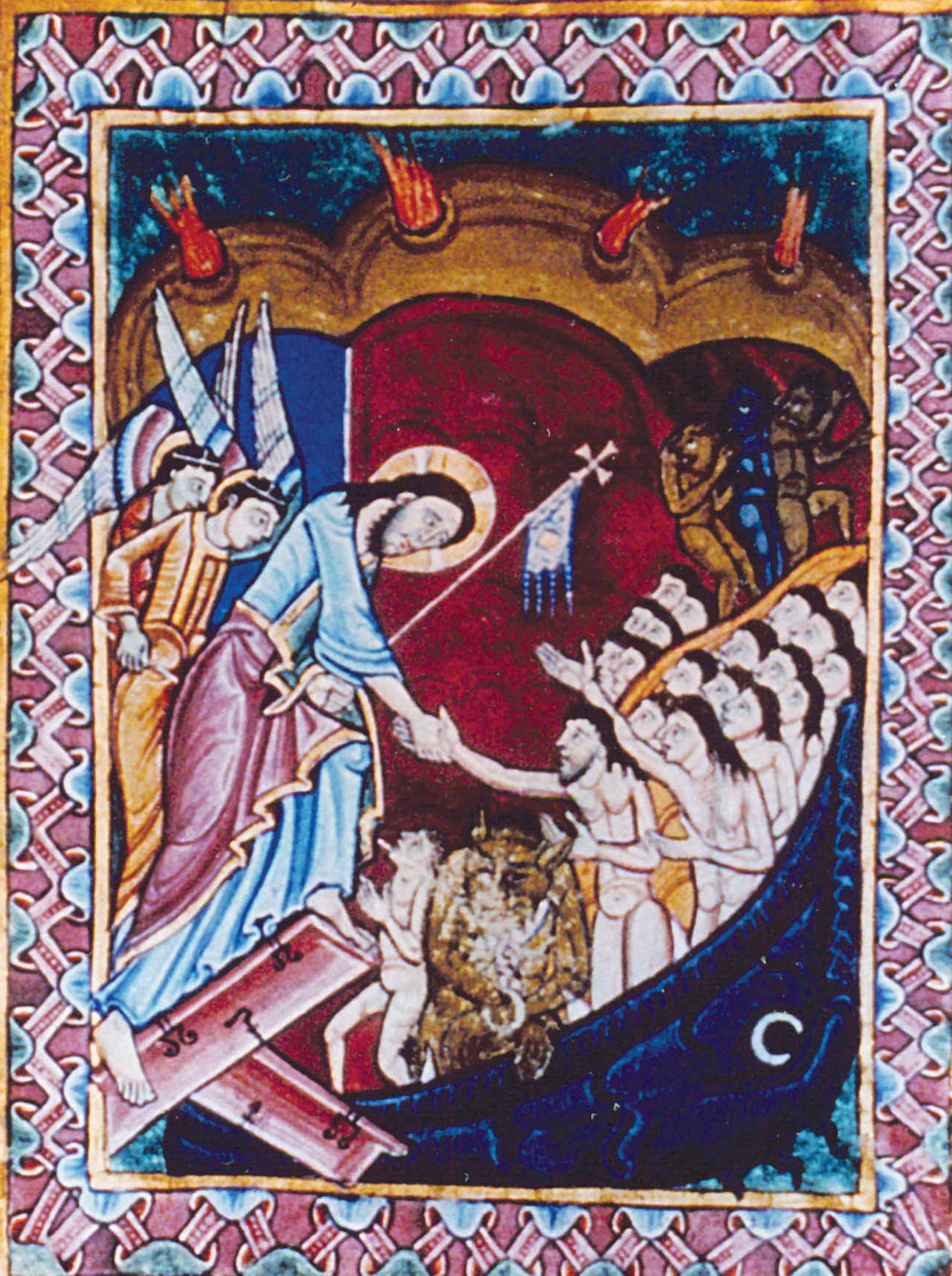 About this artwork →
Church life
- The Concordat of Worms (1122) ended a long fight between popes and emperors over who chooses bishops. Emperor Henry V gave up investing bishops with ring and staff (the signs of their spiritual office). Bishops-elect still received their lands and civil rights from the emperor. The fight mattered to Christ’s Church because bishops ordained the pastors who baptize and give the Lord’s Supper. P: Henry V and Calixtus II documents V1: Catholic Encyclopedia, Conflict of Investitures, Worms settlement V2: Britannica, Investiture, 1122 compromise paragraphs.
- Bernard of Clairvaux opposed the teacher Peter Abelard. Bernard said Abelard weakened the teaching that Christ saved sinners by his death. Bernard asked Pope Innocent II to judge the case. P: Letter 190, treatise against Abelard V1: Catholic Encyclopedia, Bernard, conflict with Abelard V2: Schaff V, §99. Sources date the council at Sens to 1140 or 1141. This unit does not build a lesson on the exact year.
- The Constitutions of Clarendon (1164) were rules from King Henry II of England. They let the king’s court handle clergy accused of crimes, and they brought church property disputes before royal judges. Thomas Becket, Archbishop of Canterbury, resisted them. Four knights killed Becket at Canterbury on 29 December 1170. Sources disagree on how much Henry planned it. The quarrel was about courts and not about Christ or the sacraments, so the Confessional Lutheran connection below does not force a tie. P: Constitutions of Clarendon, articles 1, 3, 9 V1: Catholic Encyclopedia, Thomas Becket V2: Britannica, Becket, Thomas.
Controversy and heresy
- Lateran III (1179), canon 27, condemned the Cathars, a group in southern France (the canon lists Gascony, Albi and Toulouse). It forbade anyone to shelter them or trade with them. It also told Christians to fight them with arms. Those who did got a two-year cut in church penance (the punishments the Church set for sin). The promise ties forgiveness to fighting, which raises the question of how Christ’s work forgives sin. Read the council’s labels critically, because they are the words of an opponent. P: Lateran III, canon 27 V1: Catholic Encyclopedia, Lateran III V2: Britannica, Lateran Councils, third council.
- A church council at Soissons in 1121 judged Abelard’s book on the Trinity (the teaching that one God is Father, Son, and Holy Spirit). He was made to burn it himself. Abelard wrote that the charge came from rivals. Britannica says the council accused him of the heresy of Sabellius (the claim that Father, Son and Spirit are only three names for one person). P: Abelard, Historia Calamitatum V1: Catholic Encyclopedia, Abelard V2: Britannica, Abelard, Peter.
- Bernard told Pope Innocent II that Abelard denied that Christ became human to free people from the devil’s power. Bernard said this attacked the mystery of redemption (Christ’s saving work). Bernard taught that God freed man by justice and mercy together. Read this as Bernard’s report, not as a full account of Abelard’s teaching. P: Bernard, Letter 190, chapters V and VI V1: Schaff V, §99 V2: Catholic Encyclopedia, Bernard, conflict with Abelard.
- Teaching question: Which parts of Bernard’s report of Abelard’s teaching need a check against Abelard’s own words? Bernard says Abelard’s view of Christ’s work was too small. What do you look for in Abelard’s own writing to test that claim? P: Bernard, Letter 190, chapter VI V1: Schaff V, §99 V2: Catholic Encyclopedia, Bernard, conflict with Abelard.
Councils and major events
Rome counts Lateran I, II and III as ecumenical (worldwide) councils, numbers 9, 10 and 11. Canon numbers differ between editions, so this unit follows the numbering in the Papal Encyclicals text.
- Lateran I (1123): The council approved the Worms settlement and passed rules for church discipline. It banned simony (buying or selling church offices). It forbade priests, deacons, subdeacons and monks to marry and voided such marriages (canons 21 and 7 in this edition). It also promised forgiveness of sins to those who set out to defend Jerusalem (canon 10). P: Lateran I, introduction and canons V1: Catholic Encyclopedia, Lateran I V2: Britannica, Lateran Councils.
- Lutheran classification: Mixed. The Confessions accept the aim of ending lay control of church offices and the ban on buying them. They reject the ban on clergy marriage as a human rule that binds consciences (Augsburg Confession XXIII and Apology XXIII). They also reject the promise of forgiveness for crusader service. The Confessions teach that God forgives sins for Christ’s sake through faith (Augsburg Confession IV). This is the curriculum’s confessional judgment. Augsburg Confession XXIII, Apology XXIII, Augsburg Confession IV.
- Lateran II (1139): The council dealt with the aftermath of the papal split between Innocent II and Anacletus II. It declared Anacletus’s consecrations invalid and removed his supporters. Its canon 23 condemned those who rejected the Lord’s body and blood, infant Baptism, the priesthood, and lawful marriage. Its canons 6 and 7 again forbade clergy to marry. P: Lateran II, introduction and canons 6, 7, 23 V1: Catholic Encyclopedia, Lateran II V2: Britannica, Lateran Councils.
- Lutheran classification: Mixed. The Confessions agree with canon 23 on two points. Infants are to be baptized, and Christ’s body and blood are given in the Supper (Augsburg Confession IX and X). They reject canons 6 and 7, which punished married clergy and told people not to attend their Masses (Augsburg Confession XXIII). This is the curriculum’s confessional judgment. Augsburg Confession IX, Augsburg Confession X, Augsburg Confession XXIII.
- Lateran III (1179): The council met after the Peace of Venice (1177) had ended the split between the pope and Emperor Frederick Barbarossa. It settled what remained of that split. Canon 1 made a two-thirds vote of the cardinals necessary to elect a pope. Canon 27 condemned the Cathars and called for arms against them. P: Lateran III, introduction and canons 1, 27 V1: Catholic Encyclopedia, Lateran III V2: Britannica, Lateran Councils.
- Lutheran classification: Mixed. The two-thirds rule for papal elections is a human custom that the Confessions neither require nor forbid. The Confessions agree that Manichaean dualism (the teaching of two eternal powers, one good and one evil) is false (Augsburg Confession I). They reject canon 27’s promise of forgiveness for taking up arms. They also deny that bishops can use force to settle doctrine (Augsburg Confession XXVIII). This is the curriculum’s confessional judgment. Augsburg Confession I, Augsburg Confession XXVIII, Smalcald Articles II, Of the Mass.
- Synod at Sens, 1141: A council of bishops at Sens condemned propositions taken from Abelard’s writings after Bernard of Clairvaux accused him. Abelard appealed to Rome and refused to defend himself, and the pope approved the condemnation. Abelard was reconciled with Bernard through Peter the Venerable of Cluny and died in 1142. P: Bernard, Letter 190, address to Innocent II V1: Catholic Encyclopedia, Abelard, Sens V2: Britannica, Abelard, Peter.
- Lutheran classification: Mixed. The Confessions teach that Christ truly became man and paid for sin. They share Bernard’s concern to guard Christ’s work (Augsburg Confession III and Solid Declaration VIII). They do not accept that a council or the pope settles doctrine by authority alone. They test every judgment by Scripture (Smalcald Articles II, Of the Papacy). This is the curriculum’s confessional judgment, and it rests on Bernard’s list of charges, not on the council’s own decree. Augsburg Confession III, Solid Declaration VIII, Smalcald Articles II, Of the Papacy.
- The Second Crusade (1145–1149): After the fall of Edessa, Pope Eugene III called a new crusade and promised forgiveness of sins to those who joined. Bernard of Clairvaux preached it, and King Louis VII of France and King Conrad III of Germany took the cross. It failed. The Fordham page prints wrong dates in its headings, so rely on the text of the bull and the encyclopedias for dates. P: Eugene III, summons to a crusade V1: Catholic Encyclopedia, Crusades V2: Britannica, Crusades.
- Saladin defeated the crusading army at Hattin in 1187 and captured the wooden cross that the Crusaders carried as a relic of Christ’s cross. P: Roger of Hoveden, The Fall of Jerusalem, 1187 P: De expugnatione, Hattin narrative V1: Britannica, Saladin V2: Schaff V, §51.
Major people
- Bernard of Clairvaux: Read his appeal to the pope and his discussion of Christ’s saving work. He wrote that man was lawfully held by the devil but freed in a way that shows both God’s mercy and God’s justice. P: Letter 190, address to Innocent II P: Chapter V, §§11 to 14 P: Chapter VI, §§15 and 16 V1: Catholic Encyclopedia, Bernard, conflict with Abelard V2: Schaff V, §99. The historical claim is that the dispute happened. This unit does not rule on who gave the better account.
- Peter Abelard (1079–1142) was a Paris teacher of logic and theology. He is also known for his love affair with Heloise and for his sharp debates with other scholars. Church bodies condemned his teaching in 1121 and 1141. He died in 1142. P: Abelard, Historia Calamitatum V1: Catholic Encyclopedia, Abelard V2: Britannica, Abelard, Peter.
- Hildegard of Bingen (1098–1179), a German abbess, wrote Scivias (Know the Ways), a work built around her religious visions. Read her as a woman with a strong voice in her day. Test visions against public Scripture, as the Lutheran Confessions test all teaching. P: Scivias, work and book divisions V1: Catholic Encyclopedia, Hildegard V2: Britannica, Hildegard.
- Valdes of Lyons (also called Waldo) was a rich merchant. In the 1170s he gave away his wealth to live in voluntary poverty and to preach. A chronicle written about 1218 dates his conversion to 1173. His followers became the Waldensians, or Poor of Lyons. He was moved by Christ’s words to the rich young ruler, “Go, sell all you have.” P: Anonymous chronicle, 1173 account P: Walter Map’s description, quoted in opening paragraph V1: Alan Kreider, movement and followers paragraphs V2: Musée protestant, Pierre Valdo section.
Wider world
- 1154: Henry II began his reign as king of England. P: Anglo-Saxon Chronicle, annal 1154 V1: Royal Household, Henry II biography V2: Westminster Abbey, Henry II coronation.
- 1187: Saladin captured Jerusalem, the city of Christ’s death and resurrection. P: De Expugnatione Terrae Sanctae per Saladinum, siege and surrender V1: Metropolitan Museum, Second and Third Crusade V2: Museum With No Frontiers, capital: Description.
Confessional Lutheran connection
- Lutheran teaching prompt, Christology: Compare Anselm’s account of why Christ became man (Unit 11) and Bernard’s with the Confessions. The Confessions teach that Christ is true God and true man and that his obedience and death make satisfaction for sin. Ask which parts of Anselm and Bernard match this and which parts go beyond it (for example, Bernard’s talk of the devil’s lawful claim). P: Anselm, Cur Deus Homo P: Bernard, Letter 190, chapters V and VI P: Augsburg Confession III and IV P: Formula of Concord, Solid Declaration III and VIII.
- Lutheran teaching prompt, Baptism: Examine how views of sin and grace affect the teaching of infant Baptism. Lateran II condemned those who denied infant Baptism, and the Confessions say the same. Ask how Hildegard’s Scivias speaks of the church and new birth. P: Augsburg Confession II and IX P: Large Catechism IV, Primary comparison: Scivias, book II, vision on the church and regeneration.
- Lutheran teaching prompt, Lord’s Supper: Read medieval talk about the sacraments through Christ’s words of institution (his words at the Supper) and his promise. Use those words as the test. Ask where a philosophical explanation goes beyond what those words say. P: Augsburg Confession X P: Formula of Concord, Solid Declaration VII P: Large Catechism V.
- Lutheran teaching prompt, councils: The three Lateran councils mix agreement and disagreement with the Confessions. Compare their rules on clergy marriage with Augsburg Confession XXIII, and their promises of forgiveness for armed service with Augsburg Confession IV. P: Lateran I, canons 10 and 21 P: Augsburg Confession XXIII P: Augsburg Confession IV.
- Source exercise: Compare the Jerusalem surrender account’s religious language with the political and military event. P: De expugnatione, Jerusalem narrative V1: Britannica, Saladin V2: Schaff V, §51.
- Lutheran teaching prompt, preaching and poverty: Compare Valdes’s pursuit of poverty with salvation through Christ and the public ministry. Ask how preaching serves Baptism and the Lord’s Supper. P: Valdes chronicle, Lutheran norm: Augsburg Confession III to VI, IX, X and XIV.