Week 12 · 12th century: AD 1101–1200
Artwork
Artwork and image
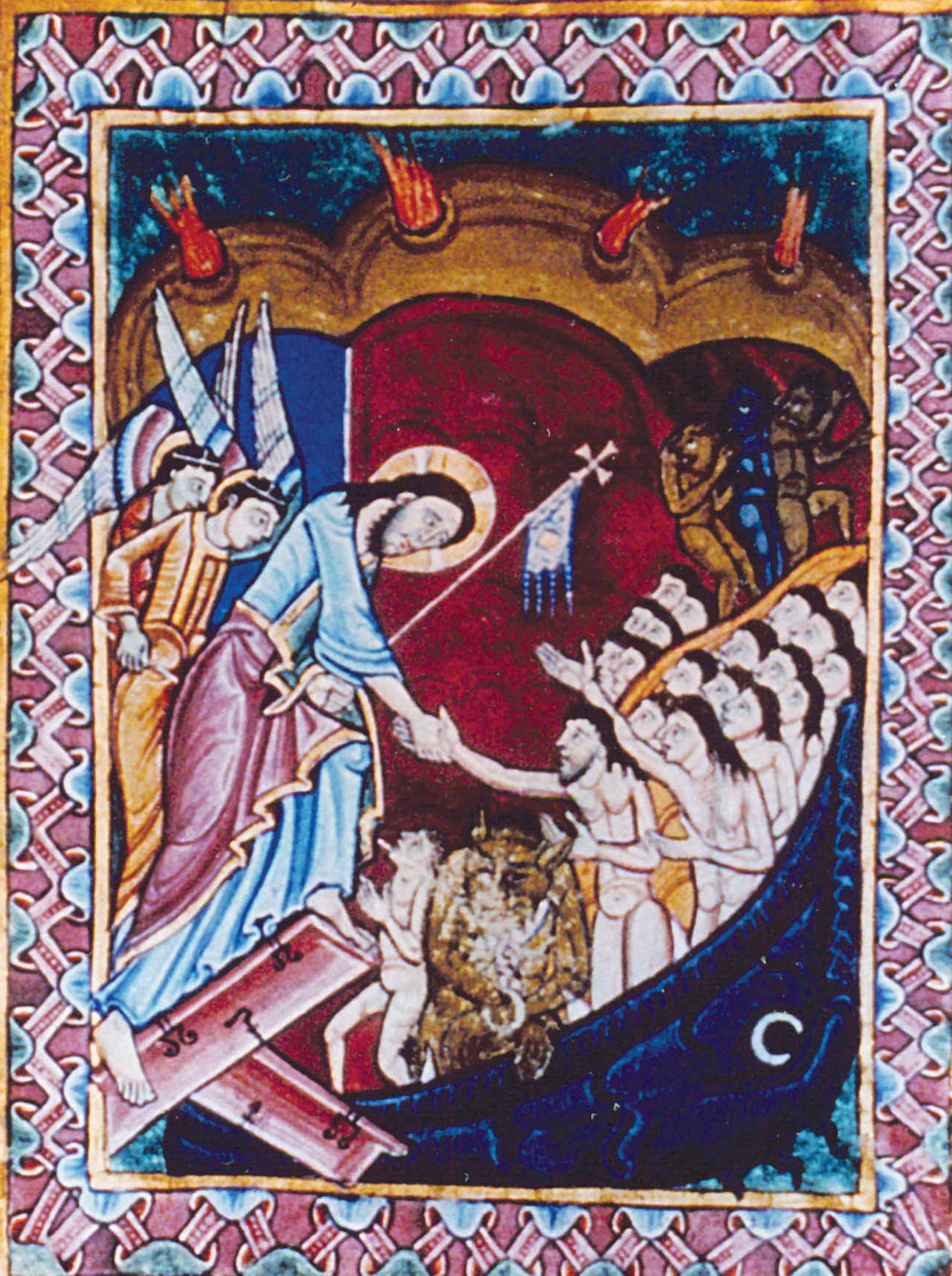
Artwork 1 (artwork.jpg)
- Title: Christ’s descent into hell (the Harrowing of Hell), miniature in the St Albans Psalter
- Artist: Unknown English artist
- Date made: About 1130, during the abbacy of Geoffrey de Gorham (1119 to 1146) at St Albans Abbey
- Medium: Painted and gilded miniature on parchment in an illuminated manuscript
- Current location: Dombibliothek (Cathedral Library), Hildesheim, Germany, in the book owned by the church of St Godehard
- Source page
- License: public domain, a photograph of a two-dimensional work from the 12th century

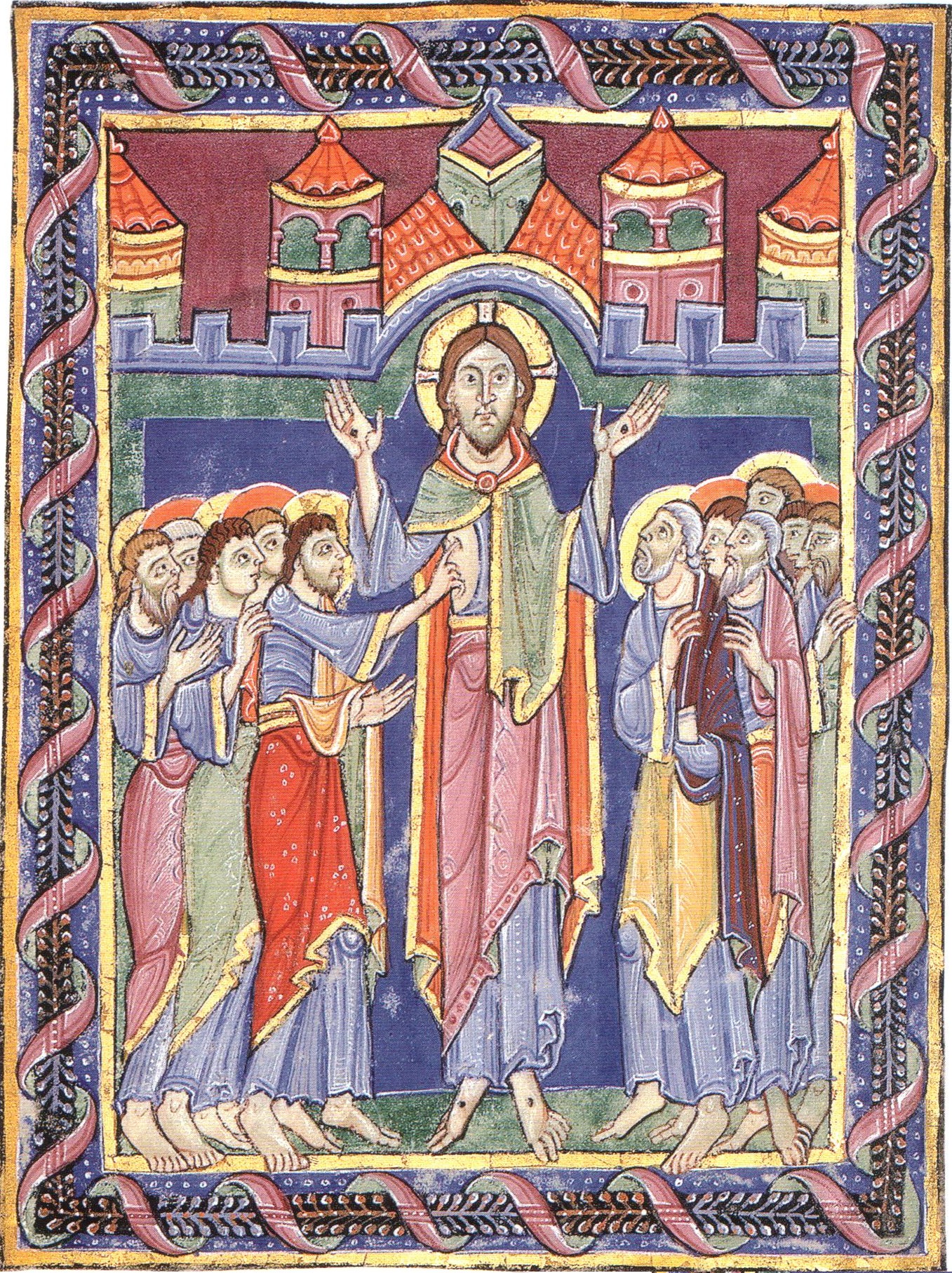
Artwork 2 (artwork-2.jpg)
- Title: Christ appears to the disciples on the eighth day (Thomas touches his wound, John 20:26–29), miniature in the St Albans Psalter
- Artist: Unknown English artist
- Date made: About 1130, same book as artwork 1
- Medium: Painted and gilded miniature on parchment in an illuminated manuscript
- Current location: Dombibliothek (Cathedral Library), Hildesheim, Germany
- Source page (1357 by 1815 pixels)
- License: public domain, a photograph of a two-dimensional work from the 12th century

What you see
In the first picture, Christ strides down into the underworld. He holds a cross-topped banner in one hand. With the other hand he grasps the wrist of a man, Adam, who reaches up from a crowd of the dead. Two angels follow Christ. Broken doors lie under his feet. A monster’s mouth gapes below, and dark demons cower on the right. In the second picture, the risen Christ stands in the middle with both hands raised, so that the wounds in his palms show. His feet show wounds too. Thomas, on the left, reaches forward and puts a finger into the wound in Christ’s side. The other disciples, with haloes, crowd close on both sides and gaze at him in awe. Towers and walls rise behind, and a twisting ribbon border frames the page.
Why it matters
The St Albans Psalter is one of the best English books of the Romanesque period (the heavy, round-arched style of the 1000s and 1100s). It holds over forty full-page miniatures, and scholars think it was made at St Albans Abbey between about 1123 and 1143, during the abbacy of Geoffrey (1119 to 1146). It was later tied to Christina of Markyate, a woman who lived as a hermit and became a prioress. Its full-page Gospel scenes run from the birth of Christ through his Resurrection. The Harrowing scene follows a tradition found in the Gospel of Nicodemus, a non-biblical book. In that tradition Christ frees the dead after his burial. The book now rests in Hildesheim.
Christ and the sacraments
Both pictures show Christ’s saving work. The second shows the risen Christ who still bears the wounds of the cross, so his victory and his payment for sin belong together. The Harrowing shows his victory over death and the devil. The Lutheran Confessions confess the same victory, though they set aside the details of how it happened. No sacrament is shown here. The Psalter does remind us that Baptism and the Lord’s Supper give out the saving work of this same Christ, who died and rose.
Teaching question
Formula of Concord IX says that Christ went down to hell as a victor and broke the devil’s power. It tells us not to chase after how this happened. Which parts of the Harrowing picture serve that victory? Which parts add detail that Scripture does not give? Read Formula of Concord IX.
Sources
- St Albans Museums, St Albans Psalter: made at St Albans Abbey between 1123 and 1143, Abbot Geoffrey (1119 to 1146), Christina of Markyate, the book at St Godehard in Hildesheim, and about forty miniatures.
- Ziereis Facsimiles, St. Alban’s Psalter: 42 full-page miniatures, 40 of them on the life of Christ, the high point of English Romanesque illumination, and the book’s arrival at St Godehard in Hildesheim in the 17th century.
- Art and Theology, Harrowing of Hell: Christ frees the righteous dead, the Apostles’ Creed, the Gospel of Nicodemus as elaboration of a few Bible verses, and the Western hellmouth.
- Wikimedia Commons, Albani-Psalter Am achten Tag: the page shows the appearance to the disciples on the eighth day (John 20:26–29), dated about 1130, public domain.
- The St Albans Psalter Project, University of Aberdeen: project page for the manuscript. It names Jane Geddes’s book on the Psalter and the Hildesheim Cathedral Library.